
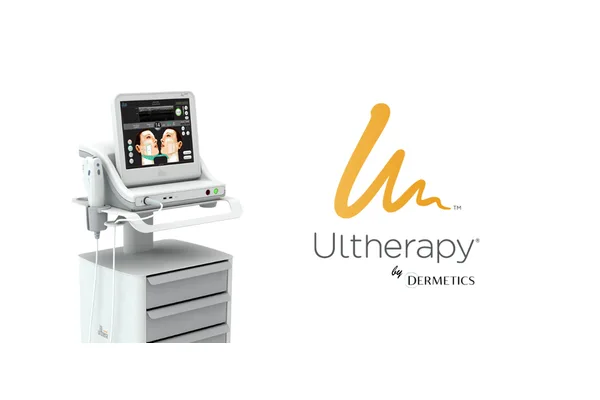
Ultherapy is a non-surgical cosmetic procedure that uses focused ultrasound energy to lift and tighten sagging skin. It’s often described as a “non-invasive facelift,” because it firms up loose skin on the brow, neck, under the chin and even the chest without any incisions. This FDA-cleared treatment sends ultrasound waves deep below the skin’s surface (down to the foundational SMAS layer, similar to what a surgeon lifts in a facelift) to trigger your body’s natural collagen production. Over the next 2–3 months, the new collagen fibers rebuild and tighten the skin, gradually giving you a firmer, more youthful contour. In other words, Ultherapy uses safe ultrasound energy (the same kind long used in medicine) to gently ”re-train” your skin from the inside out.
Most patients see subtle lifting and smoothing after one treatment. The procedure usually takes about 60–90 minutes (depending on treatment area) and requires no surgery or recovery time. You can return to your normal activities immediately. Unlike lasers or injectables that work on the surface, Ultherapy lets your provider see the tissue layers as they work, so the ultrasound energy is delivered very precisely. The results are gradual and natural-looking – for example, by 3–6 months you’ll notice tighter skin and fewer lines, and those improvements can last a year or more.
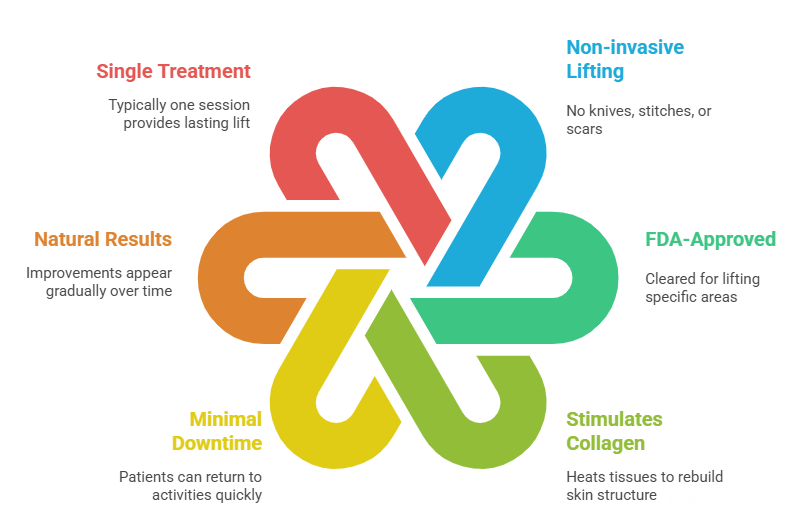
- Non-invasive lifting: No knives, no stitches, no scars.
- FDA-approved: The only ultrasound device cleared to lift the brow, neck, chin and décolletage.
- Stimulates collagen: Focused ultrasound heats deep tissues (~65°C) to trigger new collagen and elastin, rebuilding the skin’s support structure.
- Minimal downtime: Most patients go back to work immediately; side effects like mild redness or swelling usually fade within hours or days.
- Natural, gradual results: Improvements appear over 2–3 months as collagen forms, with peak effects around 3–6 months.
- Single treatment: Typically one session gives lasting lift, especially for mild-to-moderate skin laxity.
How Ultherapy Works
Ultherapy uses micro-focused ultrasound energy to rejuvenate the skin. During the procedure, a clinician will glide a handpiece over your skin. The device first performs real-time imaging, allowing the provider to see exactly where to treat. Then the device delivers short bursts of ultrasound below the skin’s surface. These create tiny thermal “coagulation points” at precise depths (including the SMAS layer under your facial muscles). Each burst heats the deep tissue to around 65°C, which momentarily breaks down old collagen and kick-starts your body’s natural healing response. In the weeks and months after, your skin builds new collagen and elastin in those areas. This new connective tissue gradually tightens and lifts the skin.
What to Expect During a Session
When you arrive for an Ultherapy session, your provider will apply a cooling gel to your skin and may mark treatment zones with a white pencil. Many doctors offer a topical anesthetic or mild pain medication beforehand, since some clients feel a prickly or warming sensation as the ultrasound energy is delivered. With the numbing in place, you’ll lie back as the device is passed over each area. Each spot might feel like a quick warming or snapping feeling. Generally patients describe it as tingling or heat, sometimes like a brief rubber-band snap. The provider may adjust intensity or give you brief breaks to keep you comfortable.
The procedure time varies by area: treating just the brow is quick, while full face, neck and chest can take 60–90 minutes. Afterward, you might have mild redness or swelling for a few hours, like a slight sunburn, and maybe some tenderness for a day or two. Most people compare it to a strong facial – you can usually wear makeup and return to work right away. There is no special recovery: you don’t need to change your skincare or avoid normal activities (aside from skipping strenuous exercise for 24 hours if advised). Any redness or swelling typically fades quickly.
Safety and Side Effects (Is Ultherapy Safe?)
Ultherapy has a strong safety record. It was FDA-cleared (first for the brow in 2009 and later for neck and chest) specifically for non-surgical skin lifting. The key is that it uses ultrasound, not cutting or harmful radiation. Ultrasound energy has been used in medicine for over 50 years, so doctors understand it well. In clinical studies and tens of thousands of treatments worldwide, no serious long-term complications have emerged. In fact, one dermatologist sums it up: Ultherapy is a “safe and effective technology” with “minimal downtime”.
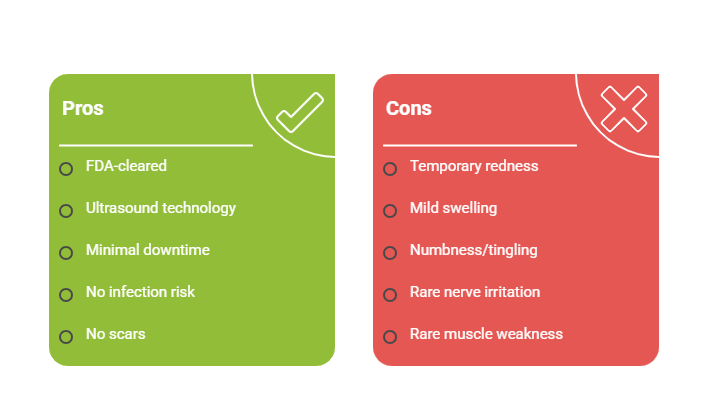
The side effects are generally minor and temporary. Right after treatment, your skin may appear slightly red or flushed for a few hours. You might feel a bit of swelling or tenderness in treated areas for a day or two. It’s also common to feel slight numbness or tingling in the skin for a day or two. Rarely, a small bruise can occur (which usually resolves within a week). These are all normal inflammatory responses as new collagen is forming. Importantly, because nothing is cut or injected, there’s no risk of infection, no scars, and no downtime. One clinic notes that there are “no long-term side effects whatsoever”.
While complications are very uncommon, a few rare risks have been reported. These include temporary numbness or nerve irritation in the treated area, and, in extremely rare cases, transient muscle weakness (because the ultrasound can sometimes affect tiny nerve endings). However, providers use careful imaging and techniques to avoid such issues. Overall, Ultherapy is considered much safer than surgical facelifts – there’s no anesthesia and no risk of surgical complications.
Does Ultherapy Hurt? (Pain and Comfort)
Pain during Ultherapy is often a concern, but most patients find it quite tolerable. Because comfort levels vary, doctors typically offer options to reduce discomfort. Some use topical numbing cream or local anesthetic; others give oral painkillers or nitrous-oxide (laughing gas). With these, many patients report feeling only warmth or a tingling snap rather than sharp pain. For example, one dermatologist notes that most people feel just a gentle heat or tingling as the ultrasound pulses through the skin.
According to patient surveys and reviews, the vast majority say Ultherapy “is not painful” in practice. In other words, it’s generally described as a discomfort rather than true pain. You might feel a short burst of heat or needle-like pinch each time the device pulses. Many compare it to small rubber-band snaps that quickly dissipate. (If you’ve had a thermage treatment or deep laser, some say it’s similar but usually less intense.) One writer graded the worst spots at an 8–9/10 without numbing, but added that with pain control the experience was quite bearable.
Results and Is It Worth It?
Most patients notice some changes almost immediately (like a lifted brow or firmer jawline), but the full effect builds gradually. Immediately after Ultherapy, you’ll see a subtle lift (often from the swelling), but the real improvements come as collagen grows. It’s common to see “initial improvements within a few weeks” and the most dramatic results around 2–3 months after treatment. By then, new collagen has tightened up the treated areas. Some patients say their jawline looks sharper, neck lines appear smoother, or brows sit slightly higher. The tightened skin looks very natural – not overdone – and it keeps improving for up to 6 months post-treatment.
Clinical studies and surveys back this up. One review notes that 95% of patients experience firmer, tighter skin within a year of Ultherapy. In other words, most people do see a noticeable benefit. Visually you can see the difference in “before and after” photos: jawlines and cheeks look lifted, and the skin’s texture is smoother. And unlike temporary fixes, Ultherapy’s effects last: most patients maintain their results for a year or even longer. (Some dermatologists suggest annual “touch-up” sessions to keep collagen levels high, especially as we continue to age.)
Ultherapy is best for those with mild to moderate skin laxity who want to avoid surgery. If your skin is only a bit loose – maybe some droopy jowls, loose neck skin, or sagging eyelids – Ultherapy can give a nice firming effect. It’s also popular for “pre-juvenation,” meaning people in their 30s and 40s who want to nip early aging in the bud by building collagen now. In contrast, if you have very severe sagging (for example, heavy jowls or neck flaps), a surgical facelift or necklift might ultimately achieve more dramatic results. Doctors often advise that non-invasive methods like Ultherapy work well for early to moderate cases, but they may not match the “wow” of surgery when laxity is advanced.
Key Takeaways
- Ultherapy is a non-invasive ultrasound treatment that lifts and tightens skin by stimulating collagen.
- It’s safe and FDA-cleared for use on the brow, chin, neck, and chest, with a strong track record and no major risks.
- Pain is usually mild – many feel only warmth or tingling. Providers use numbing or other comfort measures to keep you relaxed.
- Side effects are minimal: temporary redness, swelling or tenderness that clears in hours to days. You’ll have zero downtime.
- Results appear over months: tightening gradually over 2–3 months, often lasting a year or longer. Many patients see a subtle but noticeable lift in skin firmness.
- Is it worth it? Many say yes, especially if you want to avoid surgery. Studies show ~95% report tighter skin at 1 year. It’s a good investment for moderate aging signs. If your skin is very loose, a surgical facelift might be the better option.
Overall, Ultherapy offers a reliable way to refresh your appearance without surgery or downtime. As with any cosmetic procedure, the best approach is to consult an experienced provider. They can evaluate your skin and expectations and help you decide if Ultherapy is a suitable, worthwhile option for your needs.