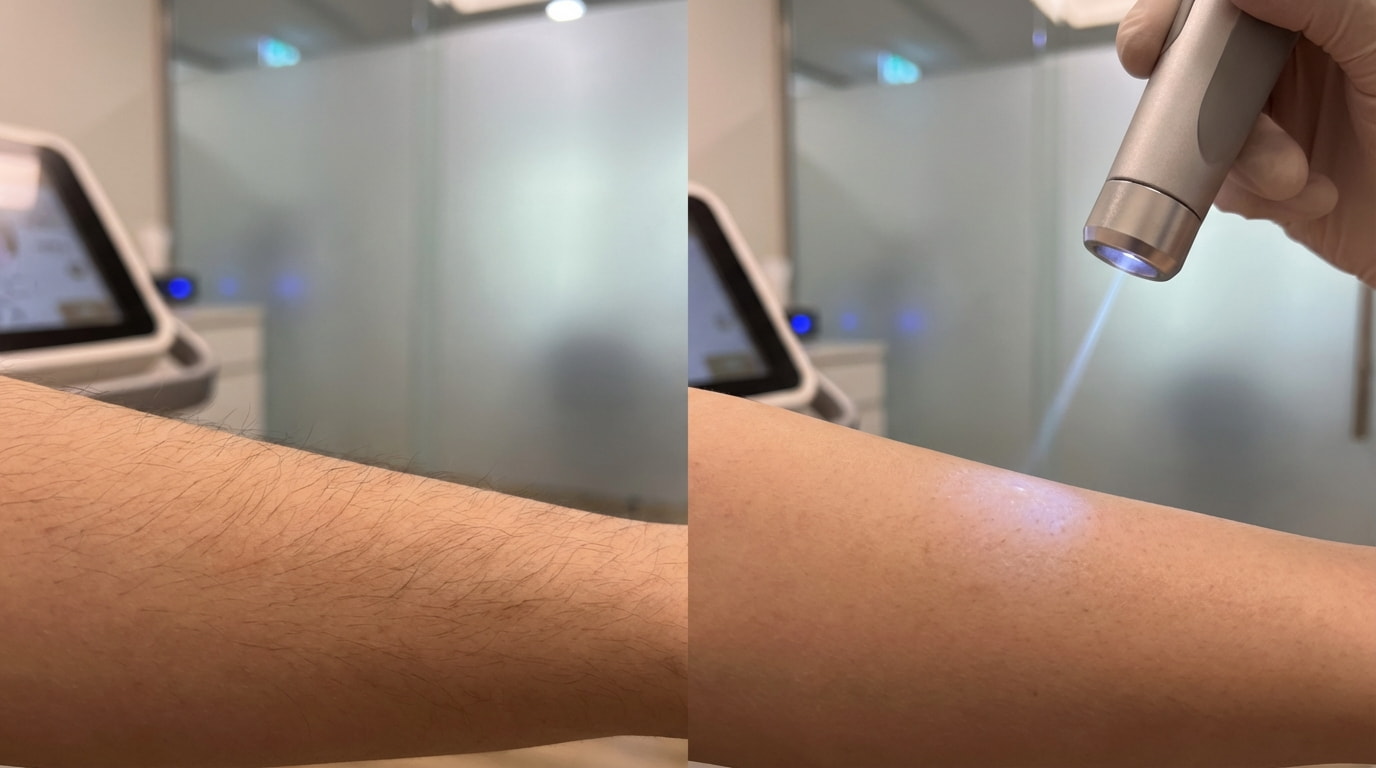


Laser hair removal results last for months to years after completing a full treatment course, and for many patients the hair reduction is essentially permanent. After six to eight sessions, most people see a 70 to 90 percent reduction in hair growth. The hair that does eventually return is typically so fine and light that it is barely noticeable, and a quick annual touch up session is usually all it takes to maintain smooth skin.
That said, the honest answer to “how long does it last” depends on your body, your hormones, and where on your body you are treating. This guide covers what the clinical research actually shows, what our patients at Integrated Wellness in Wasilla typically experience, and what you can do to make your results last as long as possible.
How Laser Hair Removal Actually Works
Understanding the mechanism helps explain why results are long lasting but not always 100 percent permanent.
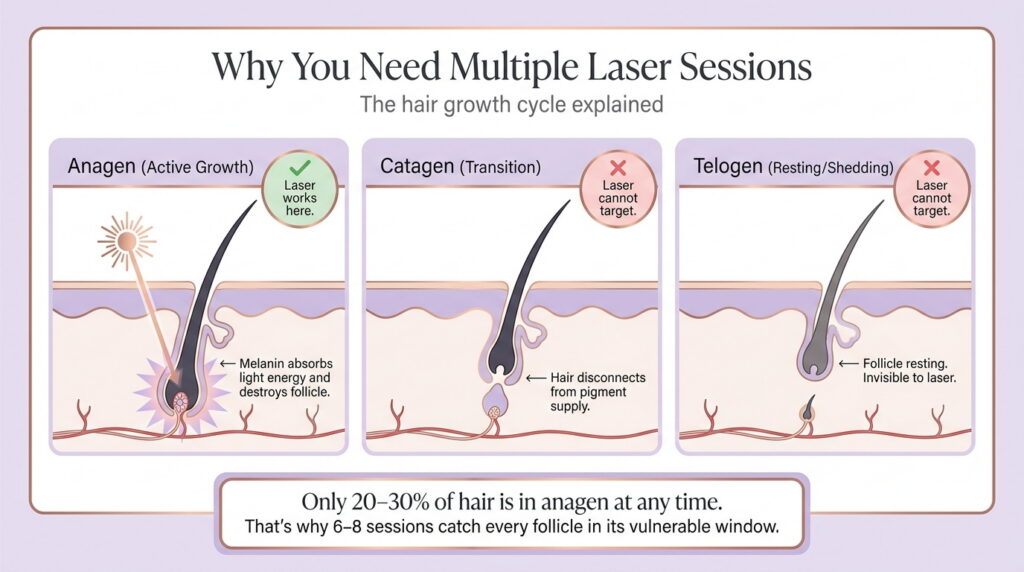
Laser hair removal works through a process called selective photothermolysis. The laser emits a concentrated beam of light at a specific wavelength. Melanin, the pigment in your hair follicle, absorbs that light energy and converts it to heat. When enough heat reaches the follicle, it damages the structures responsible for producing new hair, specifically the dermal papilla and the bulge region where hair stem cells live. A follicle that is sufficiently damaged will not produce another hair.
The catch is timing. Hair grows in cycles, and the laser can only target follicles that are in the active growth phase, called anagen. At any given moment, only about 20 to 30 percent of the hair in a treatment area is in anagen. The rest is in a resting or shedding phase, invisible to the laser because the hair has disconnected from the follicle’s pigment supply. This is why you need multiple sessions spaced weeks apart. Each session catches a new group of follicles in their active phase.
By the time you complete the full course, the laser has had a chance to reach the vast majority of follicles during their vulnerable window.
What the Research Says About Long Term Results
The clinical data on laser hair removal longevity is more extensive than most people realize.
A large two center study published in Lasers in Surgery and Medicine followed 948 patients treated with a long pulsed 755nm alexandrite laser. When researchers contacted a subset of 173 participants an average of 11.5 years after their initial treatment, 87.9 percent reported that their results had been sustained over that entire period (Russe E, et al. Lasers in Surgery and Medicine. 2020;52(1):77-83).
Think about that for a moment. Nearly nine out of ten patients still had lasting results more than a decade later. That is not a short term fix.
A meta analysis published in Lasers in Medical Science examined clinical trial data across multiple laser types and found consistent hair reduction ranging from 42 to 57 percent after just three treatment sessions, depending on the laser wavelength used. Diode lasers showed the highest efficacy at 57.5 percent, followed by alexandrite at 54.7 percent (Sadighha A, Mohaghegh Zahed G. Lasers in Medical Science. 2009;24:21-25).
A separate systematic review analyzing long term outcomes found that hair reduction declined by only about 1 to 2 percent between six month and 12 month follow ups, meaning the results held remarkably steady over time rather than gradually fading (Vano-Galvan S, et al. Journal of Cosmetic and Laser Therapy. 2022).
The bottom line from the research: laser hair removal produces durable results that persist for years, and in most cases the treated follicles never produce visible hair again.
How Long Results Last by Body Area
Not all body areas respond the same way, and this is one of the most important things to understand before starting treatment. The difference comes down to two factors: the hair growth cycle in that area and whether hormones are actively stimulating new growth.
Legs and Arms
These are among the most responsive areas. The hair growth cycle on your legs is relatively slow, which means the laser gets more complete coverage across sessions. Most patients can go three to five years with virtually no visible regrowth after completing their treatment course. When hair does eventually return, it is so fine that many people do not bother with touch up sessions at all.
Underarms
Underarm hair responds very well to laser treatment, partly because the hair there is typically dark and coarse, which gives the laser plenty of melanin to target. Results commonly last one to three years before any noticeable regrowth appears. Touch up needs are minimal.
Bikini Area
The bikini line falls somewhere between the responsive limb areas and the more hormonal facial zone. Standard bikini treatments tend to hold results well for a year or more. Brazilian treatments may need slightly more frequent maintenance because the area has somewhat higher hormonal sensitivity.
Face, Chin, and Upper Lip
This is where longevity varies the most between patients. Facial hair growth is more heavily influenced by androgens and other hormones, which means new follicles can be activated over time even after existing ones are destroyed. Women with stable hormone levels often get excellent lasting results. Women dealing with hormonal changes from conditions like PCOS, perimenopause, or menopause may find that new hair appears in treated areas even after successful treatment.
This does not mean the laser did not work. It means the hormonal shift woke up follicles that were dormant during your original treatment series. A single touch up session once or twice a year handles it easily.
Factors That Affect How Long Your Results Last
Several variables influence whether your results hold for two years or twenty.
Hair Color and Skin Tone
Lasers target melanin. Dark hair on lighter skin gives the laser the clearest target, resulting in the most thorough follicle destruction and the longest lasting results. This is still the ideal scenario, though advances in laser technology have dramatically improved outcomes for darker skin tones. Modern Nd:YAG lasers can safely and effectively treat a much wider range of complexions than what was possible even five years ago.
Blonde, red, gray, or white hair presents a real challenge because there is not enough melanin for the laser to lock onto. If your hair falls into these categories, results will be less complete and shorter lasting. Your provider should discuss this honestly during your consultation rather than promising results the technology cannot deliver.
Hormonal Status
Hormones are the biggest wild card. Estrogen, progesterone, testosterone, and other androgens all influence hair growth. Any significant hormonal shift can trigger new hair growth in treated areas.
Common triggers include pregnancy, menopause and perimenopause, polycystic ovary syndrome (PCOS), thyroid dysfunction, and starting or stopping hormonal medications including birth control. If you are dealing with a hormonal condition, treating that alongside your laser sessions will give you better and longer lasting results. At our clinic, we take a comprehensive wellness approach that addresses these factors together rather than treating hair removal in isolation.
Treatment Compliance
This one is straightforward but critical. Skipping sessions or spacing them too far apart lets hair cycles reset, which means the laser misses follicles it would have caught on schedule. Sticking to your provider’s recommended timeline, typically every four to six weeks for the face and six to eight weeks for the body, is one of the most important things you can do for long term results.
Laser Type and Provider Skill
Not all lasers perform equally, and not all providers are equally skilled at using them. The meta analysis data shows measurable differences in efficacy between laser types. But even with the same device, the provider’s ability to select the right settings for your skin tone, hair type, and treatment area makes a significant difference in how thoroughly the follicles are treated.
This is one area where cutting corners on cost usually backfires. A discounted treatment at an inexperienced clinic may require more sessions and produce shorter lasting results than fewer sessions with a qualified provider using professional grade equipment.
“Permanent Reduction” vs “Permanent Removal”: What the FDA Actually Says
There is an important distinction here that most websites either ignore or get wrong.
The FDA cleared laser hair removal devices for “permanent hair reduction,” not “permanent hair removal.” These sound similar but they mean different things legally and clinically.
Permanent hair reduction means a long term, stable decrease in the number of hairs regrowing after a treatment course. It does not guarantee that every single hair follicle is destroyed forever. What it does guarantee, based on the clinical data supporting the clearance, is that the treated area will have significantly and durably fewer hairs than before treatment.
In practical terms, this is splitting hairs (no pun intended). When 70 to 90 percent of the hair in an area is gone and what remains is fine and barely visible, most patients consider that functionally permanent. But being transparent about what the treatment can and cannot guarantee is part of informed consent, and any provider who promises “100 percent permanent removal” is either misleading you or misunderstanding the technology.
What to Expect Session by Session
If you have not started treatment yet, here is a realistic timeline of what the process looks like.
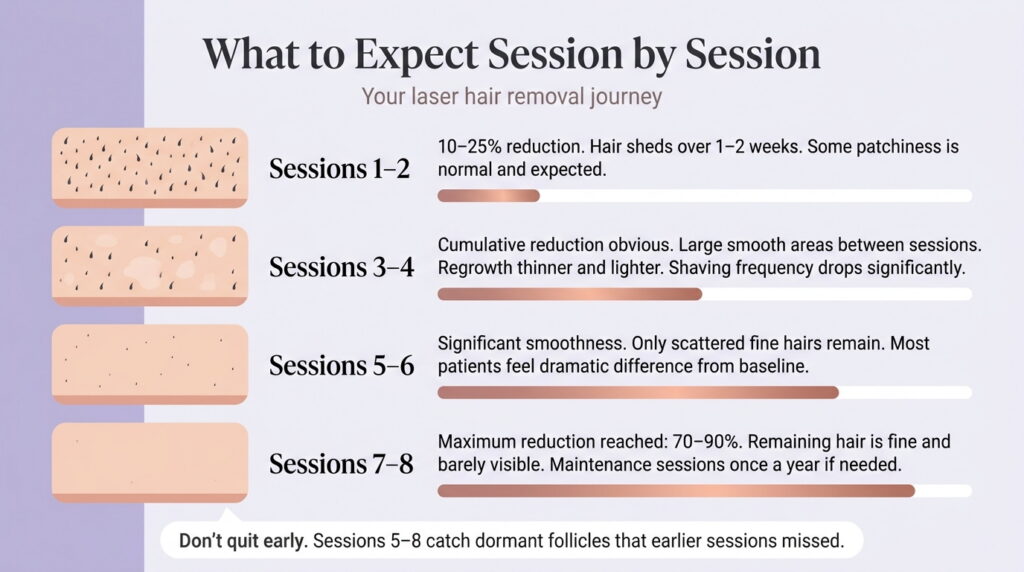
Sessions 1 and 2. You will notice hair shedding from the treated area over the next one to two weeks. The hair does not fall out immediately. It pushes out of the follicle over days as the damaged follicle releases it. After the first session, expect roughly a 10 to 25 percent reduction in visible hair. Some areas may look patchy. This is normal and actually a good sign.
Sessions 3 and 4. By this point the cumulative effect becomes obvious. Many patients notice that large areas remain smooth between sessions. The hair that does regrow is often thinner and lighter than before. Shaving frequency drops dramatically.
Sessions 5 through 8. You are in the refinement phase now. Each session picks off remaining follicles that were in dormant phases during earlier treatments. By the end of this series, most patients have reached their maximum reduction of 70 to 90 percent.
After the final session. Enjoy your results. Some patients stay completely smooth for years. Others notice fine regrowth after six to twelve months and schedule a single maintenance session. Either outcome is normal and represents successful treatment.
How to Make Your Results Last Longer
Your choices between and after treatments influence how long you stay smooth.
Shave between sessions but never wax or pluck. Shaving is fine because it cuts the hair at the surface without disturbing the follicle. Waxing, tweezing, and threading pull the hair out by the root, which removes the melanin target the laser needs to do its job. If you wax between sessions, the next laser treatment will be significantly less effective.
Protect treated areas from sun exposure. Tanned skin increases the risk of side effects and makes it harder for the laser to distinguish between follicle melanin and skin melanin. Use a broad spectrum SPF 30 or higher on treated areas, especially in the weeks before and after each session.
Address hormonal issues. If you have a known hormonal condition like PCOS or thyroid dysfunction, managing it medically will help your laser results last longer. Uncontrolled hormonal fluctuations are the number one reason people need more maintenance sessions than expected.
Complete the full course. Stopping after four sessions because you already see improvement is tempting but counterproductive. Those remaining sessions target follicles that have not yet been caught in their active phase. Skipping them means more regrowth and earlier need for touch ups.
Schedule maintenance proactively. Rather than waiting until visible regrowth appears, consider scheduling a single maintenance session once a year. This catches newly activated follicles before they produce noticeable hair and keeps your skin consistently smooth.
When Laser Hair Removal Might Not Be the Best Option
Honest information about limitations builds trust and saves you time and money.
If your hair is blonde, gray, red, or white, laser hair removal will not produce the results you are hoping for. The technology depends on melanin contrast, and without sufficient pigment in the hair follicle, the laser cannot effectively target it. Electrolysis, which destroys follicles one at a time using electrical current rather than light, is a better option for these hair colors.
If you are currently pregnant or nursing, laser treatments should be postponed. There is no evidence that laser hair removal harms a developing baby, but there are also no studies confirming safety during pregnancy, so the standard medical recommendation is to wait.
If you are taking photosensitizing medications, including certain antibiotics (tetracycline, doxycycline), some acne medications (isotretinoin), and specific supplements (St. John’s Wort), discuss this with your provider. These can increase the risk of burns and hyperpigmentation.
If you have active skin infections, open wounds, or recent sunburn in the treatment area, treatment should be delayed until the skin heals.
Frequently Asked Questions
Does laser hair removal last forever?
For many people, the results are effectively permanent. The 2020 study following patients for over 11 years found that nearly 88 percent maintained their results over that entire period. The follicles destroyed by the laser do not regenerate. However, the body can activate previously dormant follicles, especially in response to hormonal changes, which is why some people see new (but typically very fine) hair growth over time. A yearly touch up session addresses this easily.
How long does laser hair removal last after just 1 session?
A single session typically reduces hair in the treated area by 10 to 25 percent. That reduction is permanent for the specific follicles that were successfully treated. However, one session only catches follicles in the active growth phase, which represents about 20 to 30 percent of the total at any time. The remaining hair will continue growing on its normal cycle. This is why a full course of six to eight sessions is necessary to achieve comprehensive results.
Is laser hair removal permanent?
The FDA classifies it as “permanent hair reduction” rather than “permanent hair removal.” In practice, this means a long term, stable decrease of 70 to 90 percent in hair growth. The treated follicles do not come back. Any regrowth is typically from follicles that were dormant during treatment or newly activated by hormonal changes, and that hair tends to be finer and lighter than the original.
How long does facial laser hair removal last?
Facial hair removal results are generally shorter lived than body treatments because facial hair is more hormonally driven. Women with stable hormones often enjoy lasting results for a year or more between touch ups. Those with PCOS, perimenopause, or other hormonal factors may need maintenance sessions every six to twelve months. The original treated follicles stay destroyed, but new follicles can become active in hormonally sensitive areas over time.
Can hair grow back after laser hair removal?
Destroyed follicles do not produce hair again. However, the body contains follicles that were dormant (not in the active growth phase) during your treatment sessions, and these can become active later. Hormonal changes are the most common trigger. The hair that grows from these newly activated follicles is almost always finer and lighter than the hair you originally treated. Maintenance sessions handle it with a single quick visit.
How many sessions do you need for permanent results?
Most people need six to eight sessions spaced four to eight weeks apart to achieve maximum results. Some areas, particularly the face, may need additional sessions due to the faster hair growth cycle and hormonal influence. The exact number depends on your hair color, skin tone, the treatment area, and how your body responds to the first few sessions. Your provider should reassess your treatment plan after every two to three sessions.
Does laser hair removal work on all skin tones?
Modern laser technology has dramatically expanded the range of treatable skin tones. Nd:YAG lasers with longer wavelengths (1064nm) can safely treat darker complexions that older alexandrite and diode systems could not. However, the ideal contrast remains dark hair on lighter skin, and outcomes may vary for darker skin tones. The most important factor is your provider’s experience with your skin type and their ability to select the right laser settings. Ask specifically which device they plan to use and whether they have experience treating your skin tone.
Is laser hair removal safe?
Laser hair removal has a strong safety profile when performed by a trained provider using appropriate equipment and settings. The most common side effects are temporary redness and mild swelling around the treated follicles, which typically resolves within a few hours. Serious complications like burns, blistering, or permanent pigmentation changes are rare and almost always associated with improper laser settings, inadequate provider training, or failure to account for the patient’s skin type. A thorough consultation that evaluates your skin, hair, and medical history before treatment is the best safeguard.