
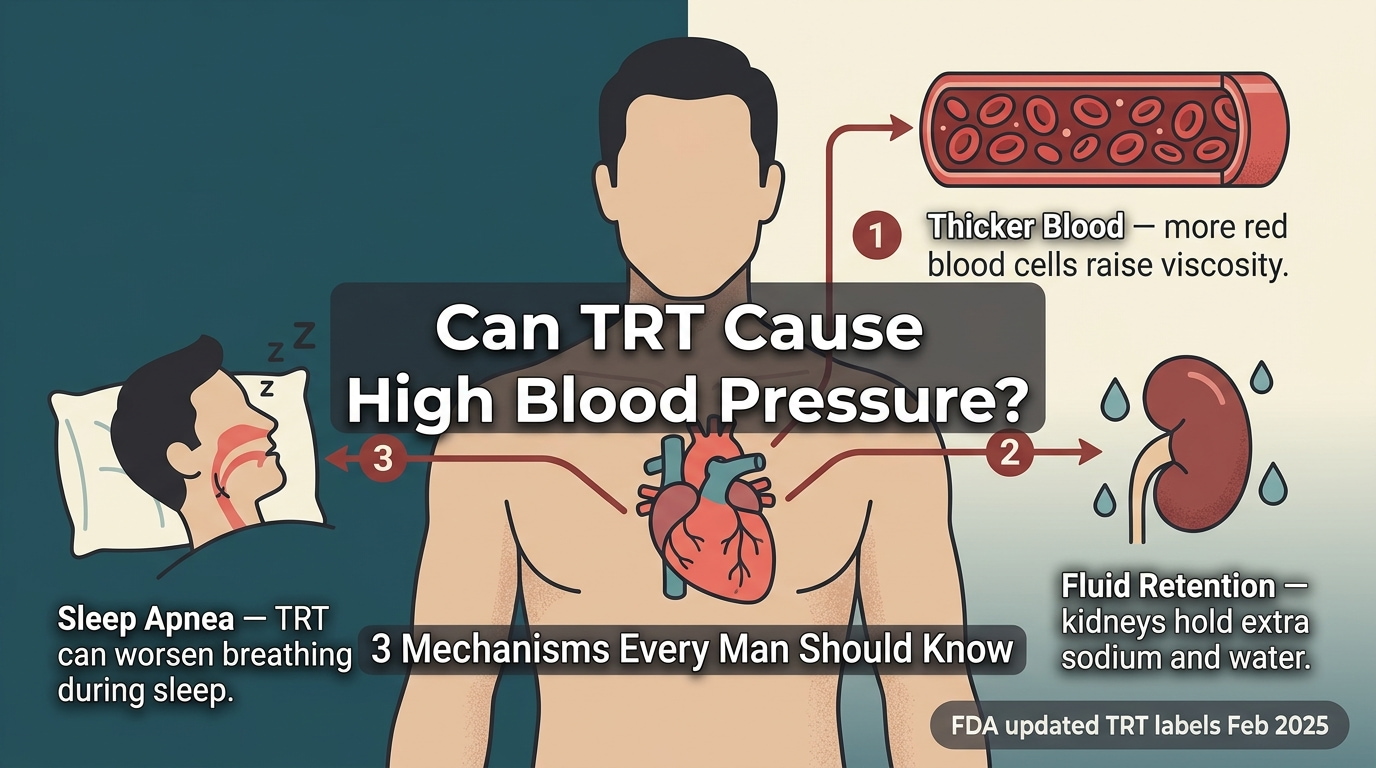
Yes, testosterone replacement therapy can raise blood pressure. The U.S. Food and Drug Administration updated the labeling on all testosterone products in February 2025 to include a specific warning about this risk. But that same FDA update also removed the previous cardiovascular death warning that had been on testosterone labels since 2015, because a landmark clinical trial showed TRT does not increase the risk of heart attacks, strokes, or cardiovascular death.
That might sound contradictory. It is not. What the science actually shows is more nuanced than either “TRT is dangerous for your heart” or “TRT is perfectly safe.” The truth sits in the middle, and understanding it matters if you are considering testosterone replacement therapy or already on it.
This article explains what the clinical research actually found, how TRT affects blood pressure through specific biological mechanisms, who faces the greatest risk, and what you and your provider can do to manage blood pressure effectively while getting the benefits of optimized testosterone.
What the FDA Actually Changed in 2025 and Why It Matters
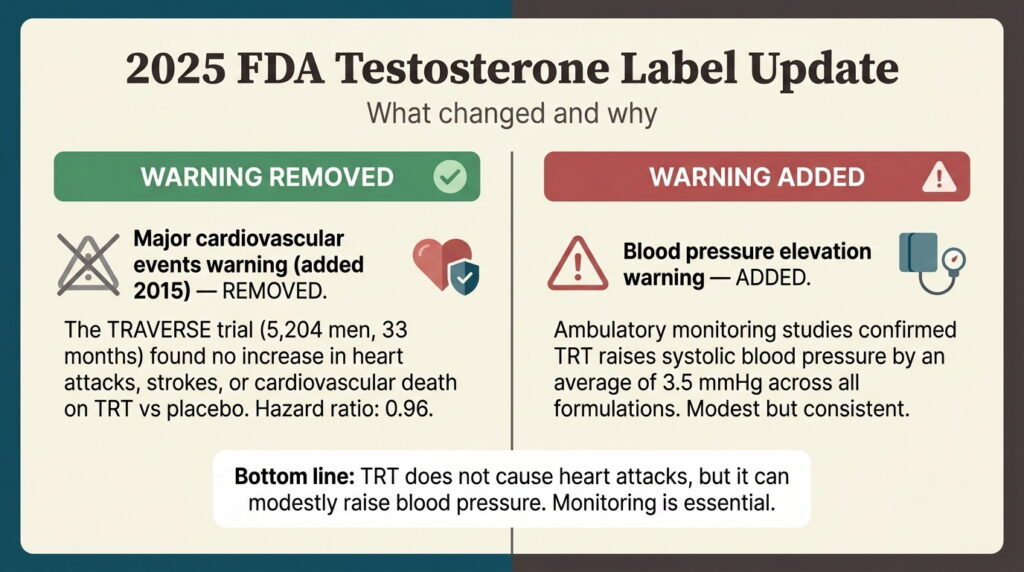
In February 2025, the FDA issued class-wide labeling changes affecting every testosterone product on the market, including Androgel, Aveed, Jatenzo, Kyzatrex, Natesto, Testim, Xyosted, and others.
Two things happened at once.
First, the FDA removed the boxed warning about increased risk of major adverse cardiovascular events. This warning had been in place since 2015 and was based on limited, conflicting data. The removal came after the TRAVERSE trial, the largest and most rigorous cardiovascular safety study ever conducted on testosterone therapy, demonstrated no increase in heart attacks, strokes, or cardiovascular death compared to placebo.
Second, the FDA added a new warning that testosterone products can increase blood pressure, and that this increase may contribute to cardiovascular risk over time. This addition was based on postmarket ambulatory blood pressure monitoring studies that the FDA had required manufacturers to conduct, which confirmed a modest but consistent blood pressure elevation across all testosterone formulations.
So the FDA simultaneously said “testosterone does not cause heart attacks” and “testosterone can raise your blood pressure.” Both statements are supported by the data, and both matter for anyone on TRT.
The TRAVERSE Trial: What 5,204 Men Taught Us
The TRAVERSE trial is the study that changed the conversation about testosterone and cardiovascular safety. Published in the New England Journal of Medicine in 2023, it was designed specifically to answer the question that had worried patients and providers for years.
The study enrolled 5,204 men between ages 45 and 80. Every participant had either existing cardiovascular disease or was at high risk for it. All had confirmed hypogonadism with testosterone levels below 300 ng/dL on two separate morning blood draws. Half received daily transdermal testosterone gel. Half received placebo. The mean follow up was 33 months.
The primary outcome, a composite of cardiovascular death, nonfatal heart attack, and nonfatal stroke, occurred in 7.0 percent of the testosterone group and 7.3 percent of the placebo group. The hazard ratio was 0.96, meaning testosterone therapy did not increase cardiovascular risk even in a population specifically selected because they were already at elevated risk for heart disease (Lincoff AM, et al. N Engl J Med. 2023;389:107-117).
That said, the trial did find higher rates of three secondary outcomes in the testosterone group: atrial fibrillation (3.5 percent versus 2.4 percent), pulmonary embolism (0.9 percent versus 0.5 percent), and acute kidney injury (2.3 percent versus 1.5 percent). These findings reinforce why monitoring during TRT is not optional. The therapy is safe when supervised properly. It is not a set it and forget it treatment.
How TRT Raises Blood Pressure: The Mechanisms
Understanding the biology helps you work with your provider to manage the risk. There are three primary pathways through which testosterone therapy can influence blood pressure.
Erythrocytosis: Your Blood Gets Thicker
This is the most clinically significant mechanism. Testosterone stimulates your bone marrow to produce more red blood cells by increasing erythropoietin, the hormone that drives red blood cell production. More red blood cells means a higher hematocrit, which is the percentage of your blood volume occupied by red blood cells. Higher hematocrit means thicker, more viscous blood. Your heart has to push harder to circulate thicker blood through your vessels, and the result is higher blood pressure.
A 2024 randomized, placebo controlled trial published in the Journal of Hypertension quantified this relationship directly. Researchers found that office systolic blood pressure increased by 6.2 mmHg in the TRT group while it decreased by 7.0 mmHg in the placebo group. Critically, the study showed that blood pressure increases were amplified by hematocrit levels. Men with higher baseline red blood cell counts or obesity experienced the greatest blood pressure elevations (Olesen TB, et al. J Hypertension. 2024;42(5):941-949).
This is why your provider should be checking your complete blood count regularly during TRT. The Endocrine Society recommends action when hematocrit exceeds 54 percent. At our clinic, we monitor hematocrit at baseline, at six to eight weeks after starting therapy, and then every six to twelve months as part of our comprehensive wellness approach.
Fluid and Sodium Retention
Testosterone can cause your kidneys to retain extra sodium and water. The increased fluid volume inside your blood vessels raises the pressure against the vessel walls. This effect tends to be most noticeable in the first few weeks of therapy and often stabilizes as your body adjusts.
The extent of fluid retention varies with the delivery method and dosing schedule. Large, infrequent injections that produce sharp peaks in testosterone levels tend to cause more fluid retention than methods that deliver a steady, consistent dose.
Sleep Apnea: The Indirect Route
Testosterone therapy can trigger or worsen obstructive sleep apnea in some men. Untreated sleep apnea is an independent and significant cause of high blood pressure. When your breathing stops repeatedly during sleep, your body releases stress hormones and your blood oxygen drops, both of which drive blood pressure upward.
This is one reason a thorough evaluation before starting TRT should include screening for sleep apnea, particularly if you snore, feel unrested after a full night of sleep, or carry excess weight around your neck and midsection.
The Other Side: Low Testosterone Itself Raises Cardiovascular Risk
Here is something most of the warnings about TRT and blood pressure leave out. Having low testosterone is not a neutral condition. It carries its own cardiovascular risks.
A 2024 study published in the World Journal of Men’s Health examined blood pressure outcomes in hypogonadal men receiving TRT and found that testosterone therapy actually reduced blood pressure, with the most significant improvements occurring in men with higher baseline hypertension. This makes physiological sense. Testosterone at normal levels promotes nitric oxide production, which relaxes blood vessel walls and supports healthy blood flow (Hackett G, et al. World J Mens Health. 2024;42(4):800-812).
Men with clinically low testosterone are more likely to have metabolic syndrome, insulin resistance, central obesity, and chronic inflammation. All of these conditions independently contribute to high blood pressure. So the question is not simply “does TRT raise blood pressure?” It is “does the blood pressure effect of TRT outweigh the cardiovascular harm of leaving low testosterone untreated?” For most men under proper medical supervision, the data suggests the answer is no, it does not.
This is exactly the kind of risk and benefit conversation we have with patients at Integrated Wellness before starting any hormone therapy. Your cardiovascular profile, metabolic health, and individual risk factors all factor into the decision.
How Much Does TRT Actually Raise Blood Pressure? The Numbers
One of the most useful things the recent research provides is actual numbers, because “TRT can raise blood pressure” means very different things depending on whether we are talking about 2 mmHg or 20 mmHg.
A 2024 phase 4 trial published in Endocrine Practice measured ambulatory blood pressure in 168 men across 41 U.S. sites. After 16 weeks of transdermal testosterone therapy, the average increase in 24-hour systolic blood pressure was 3.5 mmHg. Men who already had hypertension saw a slightly larger increase of 4.5 mmHg. Men without hypertension saw an increase of 2.2 mmHg. The researchers concluded that these increases are “likely not clinically meaningful regarding cardiovascular events,” and cardiovascular adverse events occurred in fewer than 2 percent of participants (Efros MD, et al. Endocrine Practice. 2024;30(9):821-827).
For context, the difference between a blood pressure reading of 126 and 130 mmHg systolic is well within normal daily fluctuation. Your blood pressure changes more than that between sitting down and standing up, or between a calm morning and a stressful afternoon.
That does not mean the increase is irrelevant. A small elevation that persists for years in a man who already has borderline hypertension, poor sleep, excess weight, and an inflammatory diet could compound other risk factors. But it does mean that for most men, TRT induced blood pressure changes are manageable with basic monitoring and lifestyle attention.
Who Faces the Greatest Risk
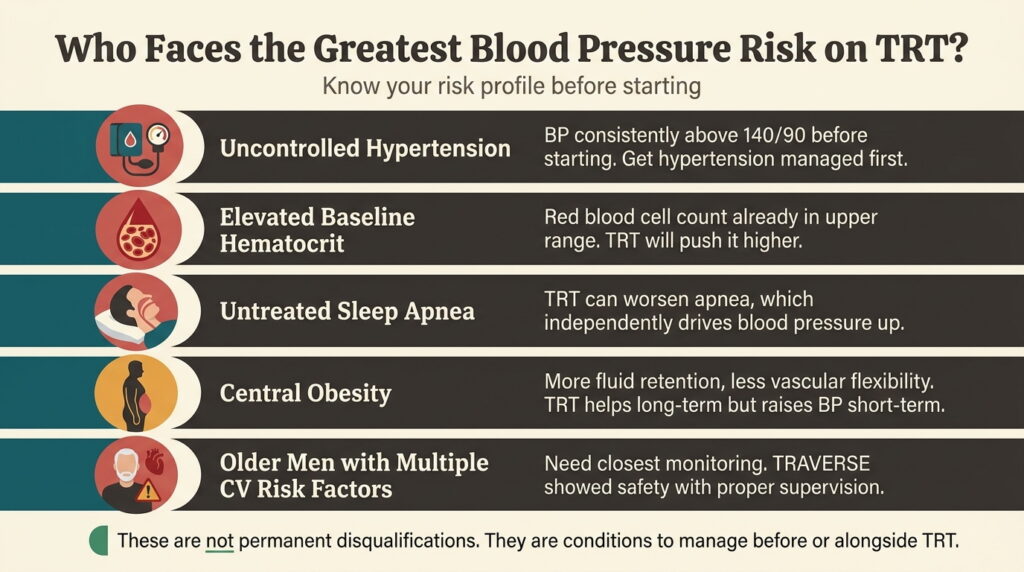
Not everyone on TRT will experience blood pressure changes, and not everyone who does experience them faces the same level of concern.
Men with existing hypertension that is not well controlled face the highest risk. If your blood pressure is already consistently above 140/90 before starting TRT, adding testosterone without first getting your blood pressure under control is adding fuel to a fire. The research is clear on this point: blood pressure should be adequately managed before initiating therapy.
Men with elevated baseline hematocrit are more susceptible. If your red blood cell counts are already in the upper range of normal, the additional stimulation from testosterone could push you past the threshold where viscosity starts affecting blood pressure significantly.
Men with untreated sleep apnea are at higher risk through the indirect pathway described above. Screening before TRT and treating any existing apnea dramatically reduces this risk factor.
Men with obesity, particularly central obesity, tend to experience more pronounced fluid retention and have less vascular flexibility. The good news is that testosterone therapy often helps with weight management over time by improving lean muscle mass and metabolic function, which can offset the initial blood pressure effects.
Older men with multiple cardiovascular risk factors need the closest monitoring, which is exactly the population the TRAVERSE trial studied and found no increase in major cardiovascular events when properly supervised.
Monitoring: What Your Provider Should Be Checking
If your provider is prescribing TRT without a structured monitoring plan, that is a red flag. Proper oversight is what separates safe therapy from unnecessary risk.
Before starting TRT, you should have baseline measurements including blood pressure (ideally tracked at home for one to two weeks, not just a single office reading), a complete blood count with hematocrit, a comprehensive metabolic panel, a lipid panel, and a PSA test. Sleep apnea screening is warranted if you have any risk factors.
During the first 12 weeks, blood pressure should be monitored regularly, either at home or at follow up visits. Lab work should be repeated at six to eight weeks to check how your hematocrit and hormone levels are responding to the chosen dose and delivery method.
Ongoing monitoring should include blood pressure checks and lab work every six to twelve months. If your hematocrit exceeds 54 percent, your provider should consider dose reduction, switching delivery methods, or therapeutic phlebotomy (essentially donating blood to lower your red blood cell count).
At Integrated Wellness, our monitoring protocol is part of a broader approach to hormone optimization that also evaluates thyroid function, metabolic markers, and overall wellness rather than treating testosterone in isolation.
Practical Ways to Manage Blood Pressure on TRT
Your choices between and during treatment influence your blood pressure as much as the testosterone itself.
Stay on top of sodium. Keep daily intake below 2,300 mg, or below 1,500 mg if you already have hypertension. Testosterone’s fluid retention effect is amplified by high sodium intake. Read labels. Most processed foods contain far more sodium than people realize.
Exercise consistently. Resistance training two to four times per week combined with 90 to 150 minutes of moderate cardiovascular exercise supports both blood pressure and the metabolic benefits of TRT. Exercise also helps manage the body composition improvements that testosterone therapy facilitates.
Hydrate adequately. Proper hydration supports blood viscosity regulation and kidney function, both of which matter more when your hematocrit is elevated.
Prioritize sleep. Seven to nine hours per night. Consistent sleep supports blood pressure regulation and hormone optimization simultaneously. If you develop snoring or daytime fatigue after starting TRT, bring it up with your provider immediately.
Manage stress. Chronic stress elevates cortisol, which directly raises blood pressure and can interfere with testosterone’s therapeutic effects. This is one area where an integrative wellness approach pays dividends that go beyond hormone levels.
Do not skip monitoring appointments. The entire safety profile of TRT depends on catching changes early. A hematocrit creeping upward is easy to manage at 52 percent. At 58 percent, you have a problem.
When TRT Should Not Be Started
There are situations where the blood pressure risk tips the balance against starting testosterone therapy, at least until other issues are addressed.
If your blood pressure is consistently above 160/100 mmHg and is not being treated or is not responding to treatment, TRT should wait. Get the hypertension under control first.
If you have untreated obstructive sleep apnea, starting TRT before addressing the apnea creates compounding risk. Treat the apnea, then revisit TRT.
If your hematocrit is already above 54 percent before therapy, adding testosterone will push it higher. The underlying cause of the elevated red blood cell count needs evaluation first.
If you have uncontrolled heart failure or recent venous thromboembolism, the fluid retention and clotting risk modifications from TRT make it inappropriate until these conditions are stabilized.
These are not permanent disqualifications. They are conditions that need to be managed before adding testosterone therapy to the picture. Your provider should be evaluating these factors during your initial consultation, not after you have already started treatment.
Frequently Asked Questions
Can TRT cause high blood pressure?
Yes. The FDA updated all testosterone product labels in February 2025 to include a warning about blood pressure elevation. Clinical studies show TRT raises systolic blood pressure by an average of 3.5 mmHg, with slightly higher increases in men who already have hypertension. The increase is driven primarily by erythrocytosis (thicker blood from increased red blood cell production) and fluid retention.
Is TRT safe if you already have high blood pressure?
It can be, but only if your hypertension is well controlled before starting therapy and your provider monitors your blood pressure and hematocrit regularly throughout treatment. Men with uncontrolled blood pressure above 160/100 mmHg should get their hypertension managed before beginning TRT. The TRAVERSE trial showed no increase in cardiovascular events even in high risk men, but that trial required blood pressure management as part of the protocol.
Does testosterone raise or lower blood pressure?
Both, depending on the situation. TRT can raise blood pressure through erythrocytosis, fluid retention, and worsening sleep apnea. But low testosterone itself is associated with higher blood pressure and increased cardiovascular risk. A 2024 study found that TRT actually lowered blood pressure in hypogonadal men, particularly those with higher baseline hypertension. The net effect depends on your individual health profile, your baseline hormone levels, and how well the therapy is monitored.
Did the FDA remove the heart warning on testosterone?
Yes and no. In February 2025, the FDA removed the 2015 boxed warning about increased risk of major cardiovascular events (heart attacks, strokes, cardiovascular death) based on the TRAVERSE trial showing no such increase. At the same time, the FDA added a new warning about blood pressure elevation and updated the venous thromboembolism warning. The overall safety picture improved, but monitoring requirements remain.
How much does TRT raise blood pressure?
Based on the most recent ambulatory blood pressure monitoring studies, the average increase is about 3.5 mmHg systolic over 16 weeks of transdermal therapy. Men with existing hypertension saw increases closer to 4.5 mmHg. Men without hypertension saw about 2.2 mmHg. A separate study in a higher risk population found increases of 6.2 mmHg. These are modest changes that are generally manageable with monitoring and lifestyle modifications.
What is hematocrit and why does it matter during TRT?
Hematocrit is the percentage of your blood volume made up of red blood cells. Normal range for men is roughly 38 to 50 percent. Testosterone stimulates red blood cell production, and when hematocrit rises above 54 percent, your blood becomes thick enough to increase clotting risk and blood pressure. This is the most important lab value to monitor during TRT. If it climbs too high, your provider can lower your dose, switch your delivery method, or recommend therapeutic phlebotomy.
Can you take blood pressure medication while on TRT?
Yes. Many men safely use both. Common antihypertensive medications including ACE inhibitors, ARBs, beta blockers, and calcium channel blockers are compatible with testosterone therapy. In some cases, starting TRT in a man with well managed hypertension may require a small adjustment to his blood pressure medication during the first few months as the body adapts. Your provider should be coordinating both treatments.
How often should blood pressure be checked during TRT?
At minimum: baseline before starting, regularly during the first 12 weeks (home monitoring is ideal), and then at every follow up visit, which should occur every six to twelve months. If you notice consistent readings above 140/90 mmHg at home, or if you develop headaches, visual changes, chest discomfort, or sudden swelling, contact your provider promptly rather than waiting for your next scheduled appointment.