White rice is not ideal for weight loss but it won’t automatically make you gain weight either. The real issue is portion size, what you eat it with, and how it fits into your overall calorie intake. In moderation, paired with protein and vegetables, white rice can absolutely be part of a weight loss diet.
White rice has a complicated reputation in the weight loss world. Some people swear it off completely. Others eat it daily and lose weight just fine. So who’s right?
Both, actually and the difference comes down to how much you eat, what you eat it with, and where it fits in your overall diet. White rice by itself isn’t a magic weight loss food, but it’s also not the enemy most diet culture makes it out to be. Let’s look at what the evidence actually says.
Why White Rice Isn’t Ideal for Weight Loss
It’s not that white rice is “bad”. It’s that it has a few properties that make weight loss harder if you’re not careful.
Low Fiber = Low Satiety
Fiber slows digestion and keeps you feeling full longer. With only 0.6 grams of fiber per cup, white rice digests quickly which means you can be hungry again within an hour or two of eating it. That cycle of quick hunger can lead to overeating and a calorie surplus, which stalls weight loss.
High Glycemic Index = Blood Sugar Spikes
White rice has a glycemic index (GI) of 64–72, which is considered high. This means it causes a rapid rise in blood sugar. Your body responds by releasing insulin to bring that sugar down and elevated insulin levels promote fat storage and can trigger cravings for more carbohydrates shortly after eating.
Easy to Overeat
White rice is light, fluffy, and mild in flavor which makes it very easy to eat more than a single portion without realizing it. A restaurant serving of white rice is often 2 to 3 cups, which can be 400 to 600 calories of almost pure carbohydrate before you’ve even added anything else to the plate.
When White Rice Can Work for Weight Loss
Here’s what most weight loss articles won’t tell you: white rice can absolutely be part of a successful weight loss diet. Here’s how.
Pair It with Protein and Vegetables
Adding lean protein (chicken, fish, tofu, eggs, beans) and non-starchy vegetables to your rice dramatically changes how your body processes the meal. Protein slows digestion and increases satiety. Vegetables add fiber and volume without many calories. The combination lowers the overall glycemic impact of the meal and keeps you full significantly longer.
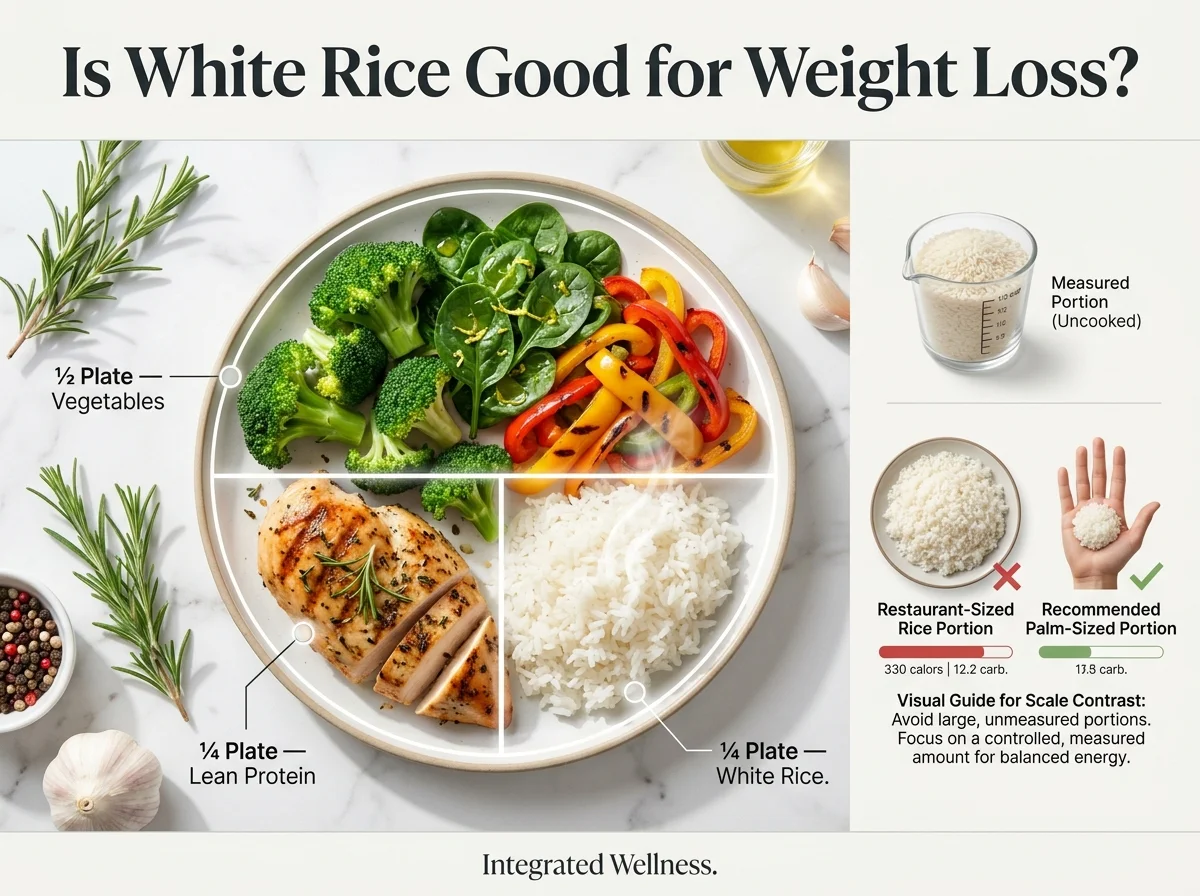
| 1/2 of Your Plate Non-starchy vegetables Broccoli, spinach, zucchini, peppers, salad | 1/4 of Your Plate Lean protein Chicken, fish, tofu, eggs, beans | 1/4 of Your Plate White rice (your carb) ~1/2 to 3/4 cup cooked |
Use the Resistant Starch Trick
This is one of the most underrated nutrition hacks for white rice. When you cook rice and then refrigerate it for several hours before eating, some of the digestible starch converts to resistant starch — a form that your body can’t fully absorb. This effectively reduces the calorie count and lowers the glycemic impact. You can eat it cold (like in a rice salad or sushi) or reheat it gently.
Watch Your Total Calorie Picture
Weight loss fundamentally comes down to a calorie deficit, burning more than you consume. White rice isn’t inherently fattening. It only becomes a problem when the total calories from all your food and drinks exceed what your body needs. If your portions are controlled and the rest of your plate is nutrient-dense, white rice doesn’t prevent weight loss.
White Rice vs. Better Alternatives
If you’re actively trying to lose weight and want to choose the most supportive carb source, here’s how white rice stacks up against common alternatives.
| Food | Calories (1 cup) | Fiber | Glycemic Index | Best For |
| White Rice | 206 | 0.6g | 64–72 (High) | Quick energy |
| Brown Rice | 216 | 3.5g | 50–55 (Medium) | Satiety, weight loss |
| Quinoa | 222 | 5.2g | 53 (Medium) | Protein + fiber |
| Cauliflower Rice | 25 | 2.1g | 15 (Very Low) | Low-carb diets |
| Basmati Rice | 190 | 0.7g | 50–58 (Medium) | Lower GI option |
5 Practical Tips for Eating White Rice While Losing Weight
- Measure your portions: Stick to 1/2 to 3/4 cup cooked rice per meal. Use a measuring cup until you can eyeball it accurately. This single habit makes the biggest difference.
- Always add protein: Never eat white rice alone. A palm-sized serving of lean protein with every rice meal dramatically improves satiety and blood sugar stability.
- Load up on vegetables first: Fill half your plate with non-starchy vegetables before adding rice. This naturally limits how much rice you eat while keeping you full.
- Cool your rice before eating: If possible, cook rice in advance, refrigerate it, and reheat gently. This increases resistant starch content and reduces the glycemic impact.
- Watch what you add to it: Heavy sauces, oils, butter, and fried toppings can turn a 200-calorie portion of rice into a 600-calorie meal. Be mindful of what you’re adding.
Frequently Asked Questions
Is white rice good for weight loss?
White rice is not the most ideal food for weight loss because it’s low in fiber, digests quickly, and has a high glycemic index. However, eaten in controlled portions and paired with protein and vegetables, it can be part of a successful weight loss diet. The key is total calorie intake and how it fits your overall eating pattern.
Does white rice cause belly fat?
White rice alone doesn’t directly cause belly fat. Belly fat accumulation is caused by a sustained calorie surplus over time. If white rice contributes to you eating more calories than you burn, it can contribute to fat gain but so can any food eaten in excess. Portion control is the key factor.
How much white rice can I eat and still lose weight?
Most nutrition guidelines suggest limiting white rice to about 1/4 of your plate, roughly 1/2 to 3/4 cup cooked per meal. This provides energy without excessive calories or carbohydrates. The rest of your meal should focus on lean protein and vegetables.
Can I get personalized nutrition guidance for weight loss?
Yes. At Integrated Wellness, we create personalized weight loss plans that include nutrition guidance, GLP-1 therapy, hormone balancing, and ongoing support. We look at your full health picture, not just calories to build a plan that works for your body.