
Perineoplasty is a surgical procedure that repairs and tightens the perineum, which is the area of skin and muscle between the vaginal opening and the anus. Women choose perineoplasty most often after childbirth has caused tearing or stretching, after a poorly healed episiotomy, when sexual function has been affected by laxity in the area, or for cosmetic concerns about the appearance of the vaginal opening. The procedure usually takes 60 to 90 minutes under local or general anesthesia, recovery takes about 6 to 8 weeks, and the total cost in the United States typically runs between $3,000 and $9,000 depending on the surgeon, location, and whether it’s combined with other procedures. After years of performing aesthetic genital surgery in Alaska, the team at Integrated Wellness has helped women across Wasilla, Anchorage, and Fairbanks understand whether this procedure is right for them, and the most important thing we tell every patient at consultation is that the decision should never be rushed.
Here’s a complete, honest guide to what perineoplasty is, what recovery looks like, and what it costs, written by a physician who actually performs the procedure.
What Perineoplasty Actually Does
The perineum is the small triangle of tissue between the bottom of the vaginal opening and the front of the anus. It contains skin, muscle, and connective tissue, and it plays an important role in pelvic floor support, sexual function, and vaginal anatomy.
When this tissue is damaged or stretched, several things can happen. The vaginal opening may appear wider than the patient feels comfortable with, often described as a “gaping” appearance. The muscles supporting the area may feel loose, which can affect sexual sensation for both the patient and her partner. Old scar tissue from childbirth tears or episiotomies may cause discomfort, especially during intercourse. And in some cases, weakening of the perineum contributes to mild pelvic organ prolapse or air entering the vagina during exercise.
Perineoplasty addresses all of these by surgically removing excess loose skin, repairing the underlying muscle and connective tissue, and restoring the natural anatomy of the perineum. The procedure does not change the inside of the vagina itself (that’s vaginoplasty, which is different). Perineoplasty focuses specifically on the external opening and the perineal body underneath.
Why Women Choose Perineoplasty
In our practice, the women who come in asking about perineoplasty typically fall into one of four categories.
Postpartum recovery. Vaginal childbirth, particularly with larger babies, episiotomy, or significant tearing, often leaves lasting changes in the perineal area. Many women find that the tissue never quite returns to how it was before, even months or years after delivery. Perineoplasty is the most common solution for postpartum perineal changes that don’t resolve on their own. The majority of our perineoplasty patients are women in their 30s and 40s who had children years ago and have decided to address the issue.
Sexual function concerns. Some women experience decreased sexual sensation, painful intercourse from old scarring, or a sense that the area no longer feels the way it used to. This is common after childbirth but can also develop with age or after prolonged vaginal stretching. Perineoplasty can restore tighter contact and reduce pain caused by scar tissue.
Cosmetic concerns. Some women feel self-conscious about the appearance of the area, particularly if there are visible skin tags, asymmetry, or a stretched-looking opening. There is no medical requirement to address cosmetic concerns, but for women whose self-image is affected, the procedure can be a meaningful change.
Functional concerns. Air entering and exiting the vagina during exercise (sometimes called vaginal flatulence or “queefing”) is more than just embarrassing for many women, and perineoplasty can reduce or eliminate this. Mild pelvic floor weakness and feelings of looseness during physical activity also often respond well to surgery combined with pelvic floor physical therapy afterward.
Most women come in with a combination of reasons. There’s rarely just one motivation. A thoughtful surgeon will spend time during the consultation understanding all of them.
Perineoplasty vs Vaginoplasty vs Labiaplasty: Clearing Up the Confusion
These three procedures get confused constantly, and the confusion matters because each one does something different.
Perineoplasty repairs and tightens the perineum (the outer area between the vaginal opening and the anus) and the muscles directly underneath it. It does not change the inside of the vagina.
Vaginoplasty tightens the entire internal vaginal canal by removing excess tissue and tightening the underlying muscles inside the vagina itself. It addresses internal looseness more than external appearance.
Labiaplasty reshapes the labia, which are the inner and outer folds of skin surrounding the vaginal opening. It doesn’t touch the perineum or the inside of the vagina.
Perineorrhaphy is closely related to perineoplasty and the terms are sometimes used interchangeably, but technically perineorrhaphy refers specifically to repairing a torn or damaged perineum (often after a difficult childbirth), while perineoplasty is the broader term that includes both repair and aesthetic tightening.
In practice, many women have more than one of these procedures done at the same time. Perineoplasty combined with vaginoplasty is very common because external and internal concerns often go together. Perineoplasty combined with labiaplasty is also common, particularly for postpartum patients. Combining procedures usually reduces total cost because facility fees and anesthesia are shared.
A proper consultation will identify which procedures actually address your specific concerns, not just upsell the most.
Who Is a Candidate for Perineoplasty
Most women in good general health who have a specific concern about the perineal area are potential candidates. The procedure is suitable for women across a wide age range, from postpartum patients in their late 20s to women in their 60s addressing age-related changes.
The strongest candidates are women who have realistic expectations about the outcome, have completed having children (because future vaginal births can undo the surgical repair), are in good general health, are not currently pregnant or breastfeeding, are not active smokers (smoking significantly slows wound healing), and have a specific concern they can articulate clearly during consultation.
A woman who comes in saying “I just don’t feel right down there” without being able to specify what’s bothering her may benefit more from pelvic floor physical therapy first, with surgery considered only if therapy doesn’t resolve the issue.
Who Is Not a Good Candidate
Honesty matters here. Perineoplasty is not the right choice for every woman who asks about it.
If you’re still planning to have more children, we usually recommend waiting until your family is complete. A future vaginal birth can stretch or tear the surgical repair and undo the work.
If you’re hoping the surgery will dramatically improve your relationship or fix sexual dissatisfaction that isn’t actually about the perineum, the procedure likely won’t deliver what you’re looking for. We’ve seen women come in with relationship issues that genuinely aren’t about physical anatomy. A frank conversation with a therapist often serves these patients better than surgery.
If you have an active pelvic infection, current pregnancy, or untreated medical conditions that affect wound healing (uncontrolled diabetes, autoimmune disorders, blood clotting disorders), surgery should wait until these are stable or resolved.
If you smoke, you should be willing to stop at least 4 weeks before surgery and during the entire recovery period. Smoking dramatically increases the risk of wound healing problems and infection.
If your primary concern is pelvic floor weakness without obvious external looseness, pelvic floor physical therapy with a trained pelvic PT should be tried first. Many patients see major improvement without surgery.
The Procedure Itself: A Brief Overview
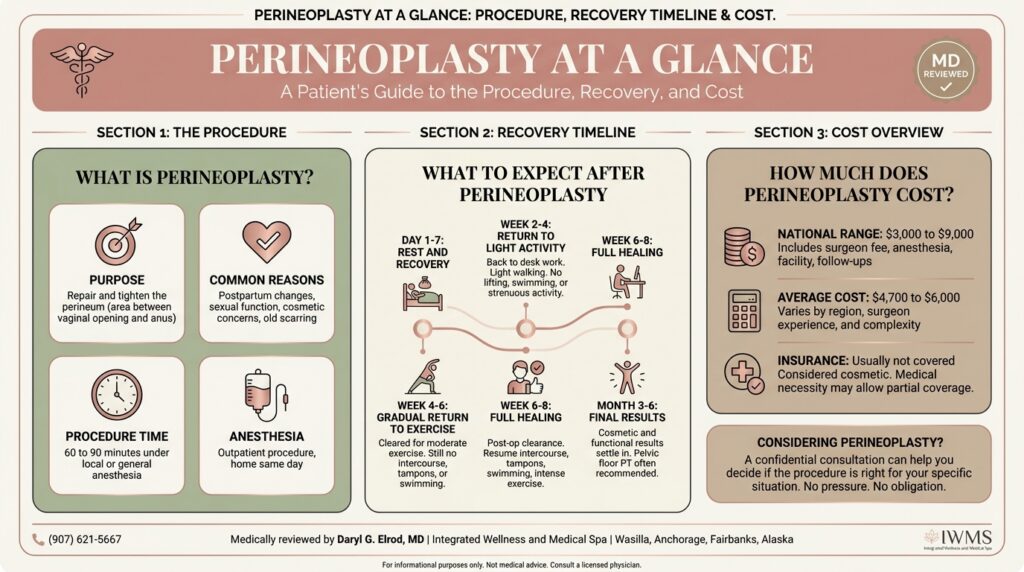
Perineoplasty is an outpatient procedure done in an accredited surgical facility. The patient is given either local anesthesia with sedation or general anesthesia depending on the extent of the repair and the patient’s preference. The procedure itself usually takes 60 to 90 minutes.
The surgeon removes the excess stretched skin from the perineal area, repairs the underlying muscle tissue with dissolving sutures, and closes the skin in a way that restores the natural anatomy. The stitches dissolve on their own over 4 to 6 weeks, so there is no need to return for suture removal.
After the procedure, patients rest in recovery for an hour or two and then go home the same day with detailed post-operative instructions, prescription pain medication, and a follow-up plan.
What to Expect After Perineoplasty: The Full Recovery Timeline
Recovery from perineoplasty is gradual but predictable. Most women are surprised at how manageable it is compared to what they imagined. Here’s what to actually expect.
The first 48 hours. Mild to moderate discomfort, some swelling, and possibly light bruising. Pain is well-controlled with prescribed medication for most patients. Ice packs applied for 15 to 20 minutes at a time help reduce swelling. Most women describe the pain as similar to a moderate menstrual cramp combined with the soreness of having had stitches in the area after childbirth. Plan to be off work and resting at home.
Days 3 to 7. Discomfort starts to decrease noticeably. Most women transition from prescription pain medication to over-the-counter Tylenol or Advil during this window. Light walking around the house is encouraged. Keep the area clean using a peri-bottle (a squeeze bottle with warm water) after using the restroom rather than wiping. Sitz baths in warm water can soothe the area. By the end of week one, most patients with desk jobs feel ready to return to work part-time, although this depends on the individual.
Weeks 2 to 4. Swelling continues to subside. Most women are back to normal daily activities including full-time desk work. Light walking, gentle stretching, and resuming most household activities are usually fine. The area still feels tender if pressed but the active discomfort is largely gone. Some patients notice the dissolving sutures slowly working their way out, which is normal.
Weeks 4 to 6. Healing is well underway. Most surgeons clear patients for moderate exercise like walking, stationary cycling without aggressive seat pressure, and gentle yoga around the 4 to 5 week mark. Resuming intimate activity, tampon use, swimming, and hot tub use is still off limits until your surgeon clears you at the post-operative visit.
Weeks 6 to 8. Full healing for most patients. The post-operative follow-up visit usually happens around 6 to 8 weeks after surgery, and most patients are cleared for sexual intercourse, intense exercise, swimming, and full activity at that visit. The first few times resuming intimacy, take it slow. Use a personal lubricant if needed and stop if anything feels uncomfortable.
Months 3 to 6. The final cosmetic and functional results settle in. Internal swelling fully resolves and the tissue takes on its final appearance and feel. Some patients notice that the area continues to refine for several months as the body completes its healing process.
Long-term care. Many patients benefit from pelvic floor physical therapy in the months after surgery. A trained pelvic PT can help strengthen the surrounding muscles to maximize the surgical result. This is particularly valuable for patients who had perineoplasty primarily for functional reasons.
Pain Management and Recovery Tips
A few things that actually help during recovery, based on what our patients consistently report.
Ice packs for the first 48 to 72 hours. Use a thin cloth between the ice and your skin and apply for 15 to 20 minutes at a time, several times per day.
Sitz baths starting on day 3 or 4. Soaking in warm water for 15 to 20 minutes a few times a day is genuinely soothing and helps healing.
A peri-bottle for cleaning. Rinse with warm water after every restroom visit instead of wiping. This is the same tool women use after vaginal birth and it makes a real difference.
Stool softeners starting the day before surgery. Constipation and straining are the enemy of perineoplasty recovery. Take Colace or a similar over-the-counter stool softener and eat high-fiber foods.
Loose, comfortable clothing. Skip tight pants, jeans, and anything with seams that press against the perineal area. Cotton underwear and loose dresses or sweatpants for the first 2 weeks.
Patience. The single most common regret women express about their recovery is rushing back to intimacy or exercise too early. Wait for your post-op clearance.
Critical Restrictions During Recovery
These rules are not negotiable. Breaking them risks tearing the surgical repair, infection, or permanent complications.
No vaginal penetration for 6 to 8 weeks. This means no sexual intercourse, no tampons, no menstrual cups, no fingers, no anything entering the vagina. The internal tissue is healing and any penetration disrupts that.
No swimming, hot tubs, or bathtub submersion for 6 weeks. Showers are fine starting 24 to 48 hours after surgery. Anything that submerges the area in water increases infection risk significantly.
No heavy lifting (over 10 pounds) for 4 weeks. This includes carrying small children, groceries, laundry baskets, and gym weights.
No strenuous exercise for 4 to 6 weeks depending on your surgeon’s clearance. Walking is fine. Running, cycling with seat pressure, weightlifting, and intense workouts are not.
No straining during bowel movements. Use stool softeners. Drink water. Eat fiber. If you find yourself straining, stop and try again later.
How Much Does Perineoplasty Cost?
This is the question most women are reluctant to ask but absolutely need answered. Honest pricing information is something most surgical practices avoid publishing, which is why we’ll be straightforward about it here.
Perineoplasty in the United States typically costs between $3,000 and $9,000. The national average sits roughly in the $4,700 to $6,000 range. Pricing varies significantly based on several factors.
What’s typically included in the quoted price. The surgeon’s fee for the procedure itself, the use of the surgical facility, anesthesia services, the standard post-operative follow-up visits (usually one at 1 to 2 weeks and one at 6 to 8 weeks), and the supplies used during surgery.
What’s not typically included. Prescription medications you’ll take during recovery (usually $20 to $80), any additional imaging or lab work if needed, pelvic floor physical therapy in the months after surgery if recommended, and any complications requiring additional treatment.
Factors that increase the cost. A more extensive repair involving significant scarring or damage from childbirth costs more than a minor tightening. General anesthesia in a hospital surgical suite costs more than local anesthesia in an office-based facility. Surgeons with more specialized training and experience in aesthetic genital surgery charge higher fees, which often correlates with better outcomes. Geographic location matters significantly. Major metropolitan areas typically run higher than smaller markets.
Factors that decrease total cost. Combining perineoplasty with other procedures like labiaplasty or vaginoplasty in a single surgical session reduces total cost because facility and anesthesia fees are shared.
Insurance coverage reality. Almost all health insurance providers classify perineoplasty as an elective cosmetic procedure and do not cover it. The exceptions are cases where the surgery is performed for clear medical indication, such as significant functional impairment from childbirth scarring or pelvic organ prolapse repair. Even in those cases, only a portion may be covered, and pre-authorization through your insurance provider is required.
Financing options. Most aesthetic surgery practices accept medical financing through companies like CareCredit, Alphaeon, or PatientFi. These typically offer 0 percent interest plans over 12 to 24 months if paid in full during the promotional period.
Considerations Specific to Alaska Patients
A few notes for women in Alaska considering perineoplasty.
There are very few practices in the state offering this kind of aesthetic genital surgery. Many Alaska women travel to Seattle or Portland for the procedure, which means flight costs, accommodation, and being away from home support during the most uncomfortable days of recovery. Having local options closes that gap.
Telemedicine consultations are widely available now, which means a woman in Bethel, Nome, Kotzebue, or any remote area can have an initial consultation by video, then travel to Wasilla, Anchorage, or wherever the surgery is performed only for the procedure itself. Pre-operative bloodwork and labs can be done at local clinics in your community.
Recovery in Alaska’s harsh climate has some specific considerations. Winter recovery means staying warm and avoiding the extreme cold during the first few weeks when circulation matters most. Summer recovery means more comfortable mobility but also extra attention to avoiding outdoor activities like hiking, swimming in lakes, or anything that could compromise healing.
Telemedicine follow-ups are also available for patients who travel back to remote areas after surgery. The standard 1-week and 6-week post-op visits can often be done by video for routine recovery, with in-person follow-up reserved for cases where it’s specifically needed.
Risks and Complications: The Honest Talk
Like any surgery, perineoplasty has risks. We don’t gloss over them.
The most common complications are bleeding, infection, and wound healing problems. These are uncommon when the procedure is done by an experienced surgeon and post-operative instructions are followed, but they happen. Smoking, diabetes, and immune disorders increase these risks.
Some patients experience longer-term sensitivity changes in the area, either increased or decreased sensation. Most of these resolve over months as nerves heal, but a small percentage are permanent.
There is a possibility that the repair won’t deliver the exact aesthetic result you envisioned. Revision surgery is sometimes done 6 to 12 months later if the initial result needs refinement.
Sexual function changes are usually positive (improved sensation, reduced discomfort from scarring), but not every patient experiences improvement, and some report no change. Setting realistic expectations during consultation is critical.
Very rarely, complications include nerve damage, fistula formation, or significant scarring that requires additional intervention.
A reputable surgeon will discuss all of these honestly during your consultation, not hide them in fine print.
When to Call Your Surgeon During Recovery
Some warning signs require prompt attention. Call your surgeon’s office if you experience fever above 101°F, increasing pain rather than steadily improving pain, heavy bleeding (more than spotting), any discharge with a foul odor, opening or separation of the surgical site, severe swelling that worsens after the first 72 hours, or inability to urinate normally.
Minor swelling, mild bruising, light spotting, gradual pain reduction, and the dissolving sutures working their way out are all normal and not cause for concern.
Bottom Line
Perineoplasty is a well-established surgical procedure that can address postpartum changes, sexual function concerns, and cosmetic issues affecting the perineum. Recovery takes about 6 to 8 weeks. Total cost in the US runs between $3,000 and $9,000, with insurance rarely covering it. The decision should never be rushed, the surgeon’s experience matters significantly, and an honest consultation will tell you whether the procedure actually addresses what’s bothering you.
If you’re considering perineoplasty and have questions specific to your situation, a confidential consultation is the right next step. There’s no obligation, no pressure, and an experienced provider can help you decide whether the procedure is right for you or whether something else (like pelvic floor PT) would serve you better.