
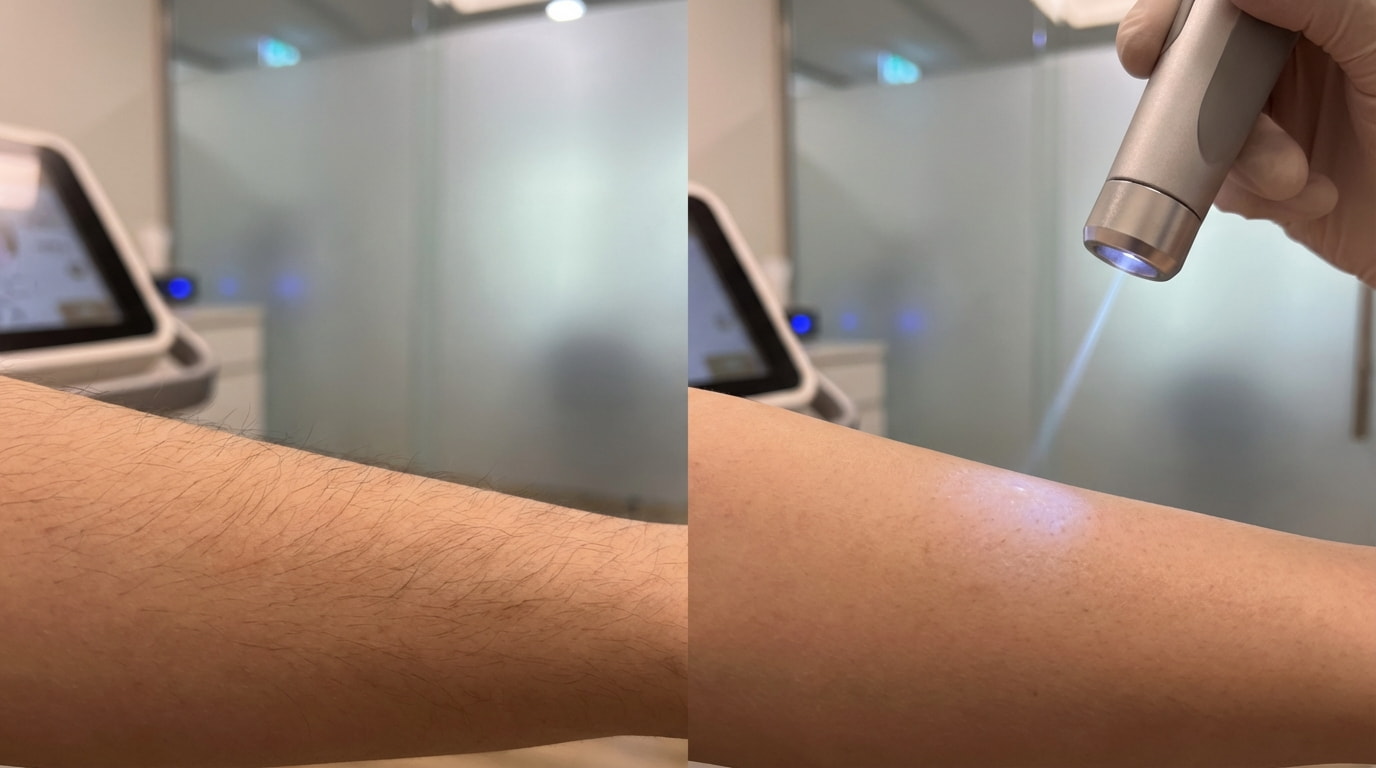
Laser hair removal is not technically 100% permanent, the FDA-approved term is “permanent hair reduction.” Most people see 80–90% reduction in hair density that lasts for years. Some hair may eventually regrow, typically finer and lighter than before. Occasional maintenance sessions keep results long-term. It is the most effective hair removal method available short of electrolysis, which is the only treatment classified as truly permanent.
If you’ve been shaving, waxing, or threading for years, you’ve probably wondered whether laser hair removal is worth it and whether the results actually last. The short version is yes, it works extremely well, but the word “permanent” comes with some nuance that’s worth understanding before you book your first session.
Here’s exactly what happens, why some hair comes back, and what you can do to get the longest-lasting results possible.
How Laser Hair Removal Actually Works
Laser hair removal uses concentrated light energy to target the melanin (pigment) inside each hair follicle. The heat from the laser damages the follicle enough to disrupt its ability to produce new hair. When the damage is sufficient, that follicle stops growing hair entirely. When it’s partial, the follicle may eventually recover and produce finer, lighter regrowth.
The reason multiple sessions are required comes down to how hair grows. At any given moment, your hair is in one of three phases: anagen (active growth), catagen (transition), or telogen (resting). Laser energy only destroys follicles that are in the anagen phase — the active growth stage where the hair shaft is still connected to the follicle and the pigment is most concentrated.
Since only about 20–30% of your hair is in anagen at any one time, each session catches a different batch of follicles at the right moment. That’s why the standard protocol is 4–6 sessions spaced 4–6 weeks apart to cycle through and treat the full population of follicles over time.
What Affects How Long Your Results Last
Results are not the same for every person or every body area. These are the factors that matter most.
| Factor | How it affects results |
| Hair color and coarseness | Dark, coarse hair responds best — the laser targets melanin, so more pigment means more effective energy absorption. Fine, light, gray, or red hair responds poorly because there’s less melanin to absorb the laser. |
| Skin tone | Modern laser technology has expanded safe treatment to darker skin tones using Nd:YAG lasers. Results can still be excellent but may require more sessions. Always choose a provider experienced with your skin type. |
| Treatment area | Legs, underarms, and arms tend to hold results longest. Hormonal areas like the face, bikini line, and abdomen are more likely to see some regrowth as hormone levels fluctuate over time. |
| Hormonal status | Hormonal changes from pregnancy, menopause, PCOS, or medications can reactivate dormant follicles and trigger new hair growth in previously treated areas — particularly on the face and body. |
| Number of sessions completed | Skipping sessions or not completing the full recommended series significantly reduces long-term results. Each session catches a different wave of follicles in the active growth phase. |
| Provider and technology | The type of laser, the settings used, and the provider’s skill all directly impact how thoroughly follicles are damaged in each session. Underpowered settings feel more comfortable but deliver weaker results. |
Do You Need Maintenance Sessions?
For most people: yes, eventually but far less often than you’d think. After completing your initial treatment series, many people go one to three years without needing any touch-up at all. When regrowth does occur, a single maintenance session is usually enough to address it.
Areas most likely to need periodic maintenance are hormone-sensitive zones: the face (especially the upper lip and chin in women), the bikini area, and the abdomen. These areas are more susceptible to follicle reactivation from hormonal fluctuations so if your hormone levels change significantly (pregnancy, menopause, new medication), some regrowth is more likely regardless of how thorough your original treatment was.
Frequently Asked Questions
How many sessions does laser hair removal take?
Most people need 4 to 6 sessions spaced 4 to 6 weeks apart for the initial treatment series. Coarser hair, larger areas, or hormonally driven hair growth may require additional sessions. You’ll typically notice significant reduction after just 2 to 3 sessions, but completing the full series is important for long-term results.
Does laser hair removal work on all skin tones and hair colors?
Modern laser technology works across a broad range of skin tones when the right laser is used. Darker skin tones are safely treated with Nd:YAG lasers, which bypass melanin in the skin and target the follicle. Hair color is a bigger limiting factor — laser works best on dark hair. Light blonde, gray, and red hair contain too little melanin for the laser to target effectively, making electrolysis a better option for those hair colors.
Is laser hair removal painful?
Most people describe the sensation as a quick snap, like a rubber band against the skin, followed by a warm feeling. Discomfort varies by area — bony or thin-skinned areas tend to be more sensitive. Modern lasers often have cooling systems built in that significantly reduce discomfort. Most people find it very tolerable, especially after the first session when expectations are set.
Is laser hair removal safe?
Yes, when performed by a trained and experienced provider using appropriate equipment and settings for your skin type. Side effects are typically mild and temporary: redness, minor swelling, or skin sensitivity lasting a day or two. Serious complications are rare and almost always related to improper settings or an inexperienced provider. Choosing a clinic with medical oversight significantly reduces your risk.