If you’re asking “What is the best laser treatment for acne scars?” the answer is: it depends on your scars and skin. There’s no one-size-fits-all laser. Dermatologists agree that the ideal laser is “always the one tailored to your specific scar type, skin tone, and recovery preferences”. In practice, fractional ablative lasers tend to give the most dramatic improvement. For example, a fractional CO₂ laser is often called the “gold standard” for deep boxcar and ice-pick scars because it vaporizes damaged layers and kick-starts collagen regrowth. By contrast, gentler lasers (like erbium ablative or non-ablative fractionals such as Fraxel®) may be better for moderate scars, lighter skin tones, or if you prefer less downtime. We’ll break down the options and why each might be “best” for different situations.
How Laser Therapy Works
Laser resurfacing treatments deliver intense pulses of light to your skin to create micro-injuries. This controlled damage triggers your body’s healing response, breaking down old scar tissue and building new collagen. Ablative lasers (like CO₂ and Erbium YAG) actually remove thin layers of skin, producing a strong healing response that fills deep scars. Non-ablative lasers (like Fraxel) leave the surface intact and heat deeper layers, encouraging collagen growth without cutting the skin. Over weeks to months, these processes smooth out pits and scars and improve overall texture. In short, lasers remodel scarred skin from the inside out.
Top Laser Options for Acne Scars
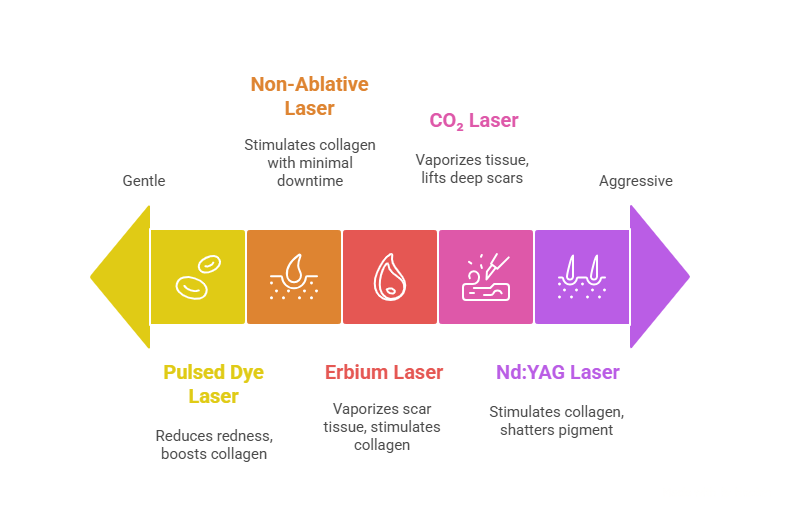
- Fractional CO₂ Laser (Ablative CO₂) – Often considered the most powerful choice for deep scars. It creates a grid of microscopic wounds in the skin, causing tissue vaporization and a “bottom-up” healing process that lifts even ice-pick scars. Most patients see dramatic smoothing after just one treatment, but expect up to a week of redness, swelling or peeling during recovery. This laser is usually reserved for severe scarring because of its intensity and downtime.
- Ablative Erbium Laser (Erbium:YAG) – A slightly gentler ablative alternative. Erbium lasers also vaporize scar tissue and stimulate collagen, but they penetrate less deeply than CO₂. This makes erbium a good choice for moderate scars (rolling or boxcar) when CO₂ is overkill. It still resurfaces the skin and promotes remodeling, but with a shorter healing time.
- Non-Ablative Fractional Lasers (e.g. Fraxel®) – These lasers heat columns of deep skin without removing the top layer. They gradually stimulate collagen with minimal downtime (often just a few days of mild redness). Non-ablative fractionals are great for mild-to-moderate scars or if you want multiple gradual improvements rather than one aggressive treatment. Each session gives steady smoothing, but you’ll usually need 3–6 sessions to see full benefit (unlike ablative lasers which can work faster but have longer recovery).
- Pulsed Dye & Vascular Lasers (e.g. VBeam®/KTP) – These target the redness in scars by heating blood vessels. A pulsed-dye laser like VBeam is especially effective for pink or red acne scars. It sends light that the blood absorbs, reducing inflammation and redness while gently boosting collagen around the scars. This helps fade discoloration (post-inflammatory erythema) that often accompanies acne. These lasers are usually combined with resurfacing treatments if color is a concern.
- Nd:YAG and Other Deep Lasers (1064 nm, Picosecond) – For darker skin tones or deeply pigmented scars, longer-wavelength lasers like Nd:YAG are safer because they’re less likely to burn melanin. A fractional Nd:YAG device (sometimes branded as Clear + Brilliant or similar) penetrates deep to stimulate collagen with minimal surface risk. Picosecond lasers (e.g. PicoSure®, PicoPlus) also fall here – they deliver ultra-short pulses that shatter dark pigment in scars with very little downtime. Overall, these lasers are chosen for deep remodeling or treating brown pigmentation while protecting the surrounding skin.
Key Factors in Choosing Your Laser
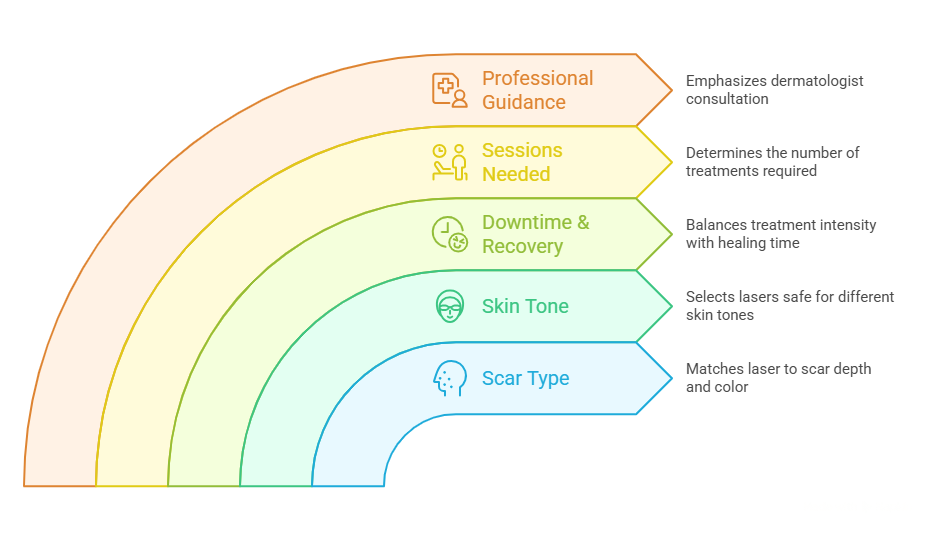
- Scar Type: Deep, ice-pick or boxcar scars require more aggressive resurfacing. Shallow rolling scars often respond well to gentler fractionated lasers. Red (erythematous) scars improve best with vascular lasers (pulsed dye/KTP). Brown spots or dark scars may need pigment-targeting lasers (like Nd:YAG or picosecond) to fade discoloration.
- Skin Tone: If you have medium-to-dark skin, certain lasers carry higher risks of pigmentation changes. Dermatologists recommend safer options like non-ablative fractionals or Nd:YAG for darker skin. These have lower energy at the surface and reduce the chance of post-inflammatory hyperpigmentation.
- Downtime & Recovery: Ablative treatments (CO₂, erbium) yield big results but require longer downtime (redness/peeling ~1 week). Non-ablative lasers heal faster (a few days of mild redness) but need more sessions. Choose a laser (or combination) that matches how much healing time you can take.
- Sessions Needed: Most lasers require 3–6 sessions spaced weeks apart for optimal results. A strong ablative laser might give noticeable change in one session, but multiple passes or repeat sessions are still common. In contrast, milder lasers (or pigmented-targeting lasers) usually need repeat treatments to accumulate results.
- Professional Guidance: With so many options, a skin specialist will tailor the treatment to you. As one source advises, “seek the guidance of an acne scar dermatologist to determine the right laser for your needs.”. A board-certified dermatologist or experienced laser provider will consider your scars, skin type, and goals to pick the safest, most effective laser (or combination) for you.
Many patients see dramatic improvements after laser therapy. In this example, a patient’s acne scars are visible on the left; on the right (after treatment), the skin looks much smoother. For darker skin tones like hers, lasers such as Nd:YAG were likely used to avoid pigment side-effects. This before-and-after illustrates how carefully chosen laser resurfacing can “smooth out the texture” of scarred skin by stimulating new collagen and remodeling the tissue.
Recovery and Aftercare
After laser treatment, proper care is crucial. Common side effects include redness, swelling and peeling – especially with aggressive lasers. Your skin will be sensitive, so follow your doctor’s instructions closely. This usually means keeping the area clean and moisturized, avoiding irritants (like retinoids or peels), and wearing broad-spectrum sunscreen every day. Protecting your skin from sun and inflammation ensures the best healing. Within a week or two (depending on the laser), most of the redness subsides and you’ll see gradual improvement as collagen rebuilds under the surface.
Laser resurfacing offers one of the most powerful ways to soften acne scars, but “complete removal” is rare. The goal is smoother, more even skin. In many cases, lasers are combined with other therapies (like microneedling or fillers) to optimize results. Even so, the right laser can dramatically fade scars and boost skin confidence.