
Most skin tag removals heal within about one to two weeks. Tiny tags may disappear or heal in just a few days, but larger tags (or those that required stitches) can take longer – often up to two or even three weeks. Immediately after removal, the spot may look red and feel slightly tender, and a small scab usually forms. This is normal. Over the next week or two, new skin grows under the scab and it naturally falls off on its own. Following your doctor’s care instructions will help the area heal smoothly and reduce any scarring.
Skin tags are just harmless little flaps of skin that often appear where the skin rubs together (for example, on the neck, underarms, or around the eyes). Although harmless, they can catch on clothing or jewelry and bleed or become irritated. To remove them, doctors may use different methods, each with a slightly different healing timeline:
- Cryotherapy (freezing): Freezing with liquid nitrogen makes the tag form a scab and fall off. The treated area usually heals in about 1–2 weeks.
- Cauterization (burning): Burning the tag with an electric current or heat is similar. The wound typically takes 1–2 weeks to heal as the scab sloughs off.
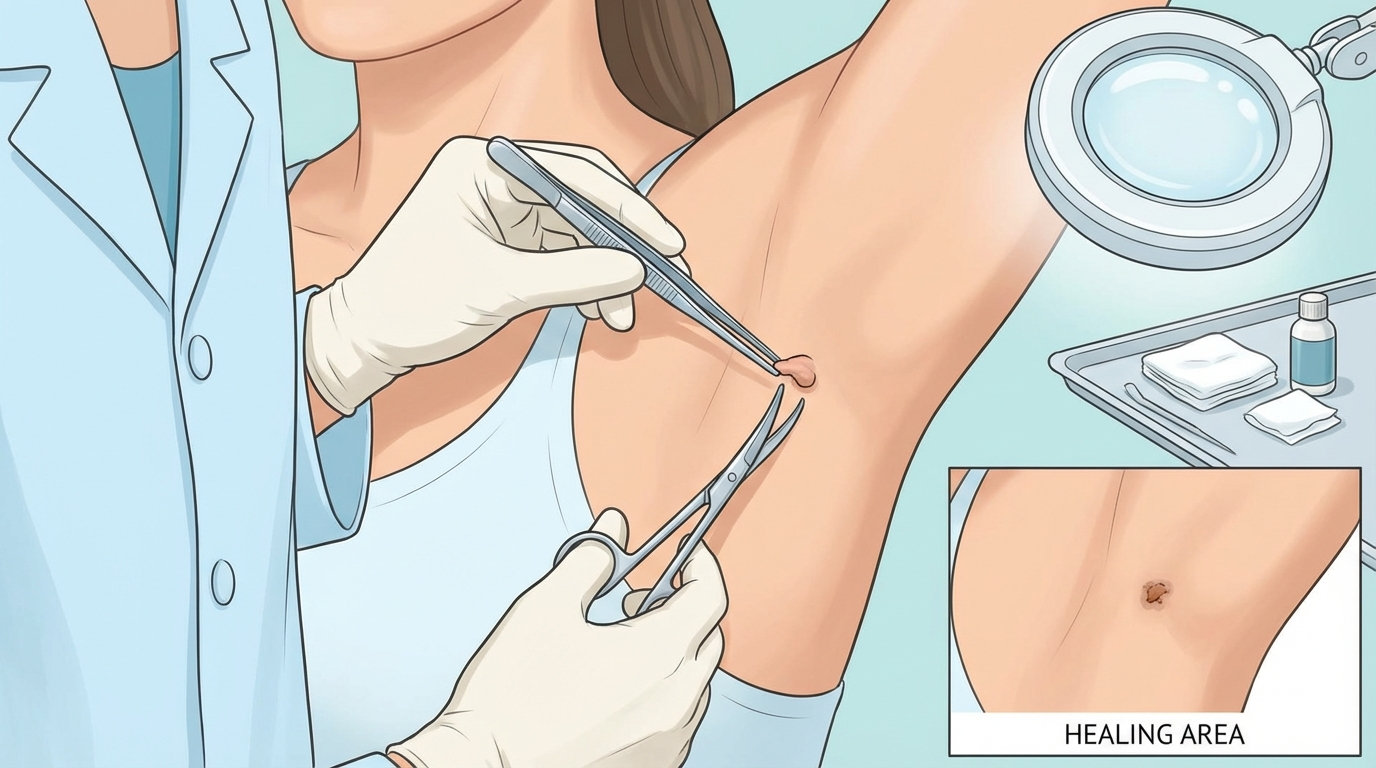
- Surgical excision: Cutting the tag off with scissors or a scalpel requires about 7–10 days of healing. (If stitches are used, you may need closer to 2 weeks for full healing.)
- Laser removal: This method often heals the fastest. Many laser-treated spots are completely healed in roughly 5–7 days. Mild redness or swelling can occur but typically resolves quickly.
During the removal procedure, the area is usually numbed with a local anesthetic so you feel little to no pain. For example, if a doctor freezes your skin tag, it will blacken and form a scab that drops off in about 1–2 weeks. If the tag is cut out, you’ll have a tiny wound that generally heals under a bandage in about a week. Often a bit of cautery (burning) is used to stop any bleeding, creating a small scab that clears in roughly 1–2 weeks. Because these procedures are minor, most people only notice mild soreness or slight redness afterward – serious pain is uncommon. In large tags that require stitches, expect closer to 10–14 days of healing time. In all cases, healthy new skin will replace the treated area as the body’s natural healing process completes.
Aftercare Tips for Faster Healing
Proper care after removal helps your skin heal quickly and cleanly. Follow these steps:
- Clean the area gently: Wash it once or twice daily with mild soap and water. Pat the skin dry.
- Keep it moist: Apply a thin layer of petroleum jelly (Vaseline) or an antibiotic ointment. This prevents a hard, itchy scab and promotes new skin growth.
- Hands off: Do not pick, scratch, or rub the scab. Let it fall off on its own. Picking can cause scarring or infection.
- Wear loose clothing: Avoid tight clothes or jewelry that might rub the healing spot. Gentle coverage or a bandage can protect it if needed.
- Avoid soaking: Stay out of pools, hot tubs, saunas, or baths for a few days. Keeping the area dry helps prevent infection.
- Protect from sun: Keep the healing skin out of strong sun for the first 1–2 weeks (use sunscreen or cover the area). This prevents dark spots or discoloration.
When to Call the Doctor
Most skin tag removal sites heal without problems. However, watch for any signs of trouble. Contact your doctor if the area becomes increasingly red, swollen, painful, or if pus appears. Also seek medical advice if the spot shows no improvement after a couple of weeks. Rare complications like infection or excess bleeding can occur, so it’s better to check with a professional if you’re unsure. In general, dermatologists note that a treated skin tag area should look healed (clear and smooth) within roughly 1–2 weeks, so you can return to normal skin confidently.