

Losing weight is a huge achievement, but loose or sagging skin can be frustrating. The good news is that yes, you can help tighten skin naturally after weight loss. By building muscle under the skin, eating a skin-healthy diet, staying well-hydrated, and caring for your skin, you give it the support it needs to rebound. In fact, the skin’s stretchiness comes from collagen (for firmness) and elastin (for elasticity). When these fibers are stretched out by extra weight, they can lose some snap-back ability. Focusing on strength training, nutrition and skincare helps strengthen those fibers so your skin appears firmer.
Why Skin Becomes Loose
Your skin normally bounces back because collagen and elastin in the dermis allow it to stretch and contract. However, prolonged stretching (years of excess weight) can damage these fibers, so they don’t fully retract after weight loss. Several factors affect how much your skin can tighten:
- Amount and Speed of Weight Loss: Losing a lot of weight quickly often leads to more noticeable sagging.
- Age & Genetics: Older skin makes less collagen, and your genes influence skin elasticity.
- Sun & Smoking: Chronic sun exposure and smoking both break down collagen and elastin, making skin more prone to sag.
Understanding these factors can help set realistic expectations. While we can’t change our genes or age, we can focus on habits that help skin bounce back.
1. Build Muscle with Strength Training
One of the most powerful ways to fill out loose skin is to build muscle underneath it. Strength training (lifting weights, bodyweight exercises, resistance bands, etc.) creates lean muscle that gives your skin something to cling to. In fact, a 2023 study found that regular resistance training improves skin elasticity and thickens the dermis (the skin’s support layer). This means exercise doesn’t just tone your body – it actually has a positive effect on the skin itself.
- Aim to work all major muscle groups 2–3 times per week. The U.S. Physical Activity Guidelines recommend strength training every major muscle group at least twice weekly.
- Examples of exercises:
- Lower body: Squats and lunges (targets thighs and glutes).
- Upper body: Push-ups, bench presses, or rows (chest, shoulders, back).
- Core: Planks and crunches (tighten the belly area).
These moves help “fill in” loose areas. Over time, the new muscle can make sagging areas look firmer. Think of it like giving your skin an internal “scaffolding” to wrap around.
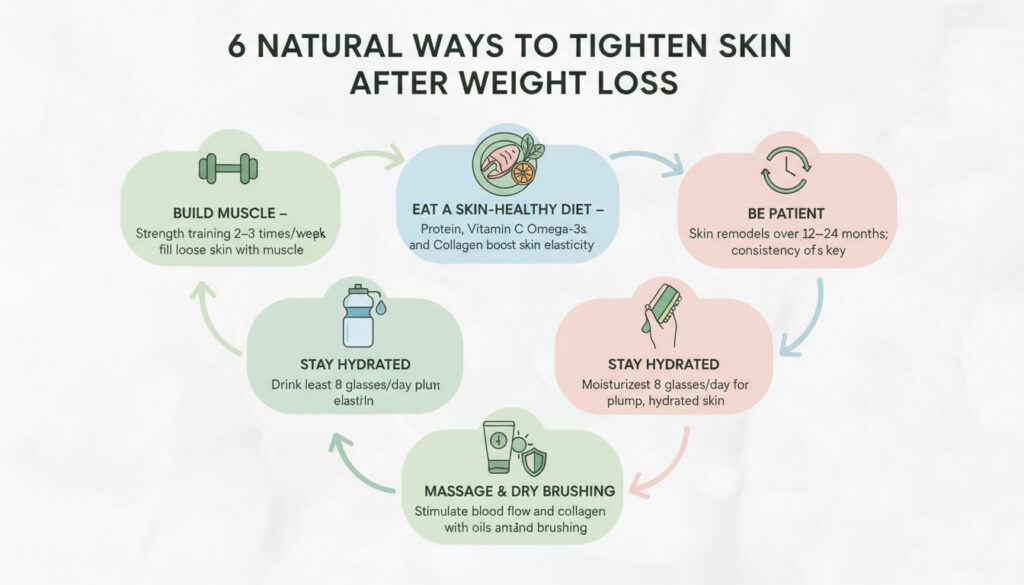
2. Eat a Nutrient-Rich, Skin-Healthy Diet
What you eat deeply affects your skin’s repair and elasticity. Certain nutrients are especially important for collagen production and overall skin health. Make sure to include:
- Lean Protein: Foods like chicken, fish, eggs, beans, and lentils provide amino acids (proline, glycine, hydroxyproline) that are the building blocks of collagen. Eating enough protein supports skin structure and repair.
- Vitamin C: Citrus fruits (oranges, lemons), berries, bell peppers, and leafy greens are rich in vitamin C. This vitamin is a vital cofactor for collagen synthesis. Inadequate vitamin C means your body can’t effectively make new collagen. It also helps protect existing collagen from sun damage.
- Omega-3 Fatty Acids: Found in fatty fish (salmon, tuna), flaxseeds, walnuts, and chia seeds. Omega-3s have anti-inflammatory effects and have been shown to increase skin elasticity. Including healthy fats helps keep skin supple.
- Water: Plenty of water is crucial. Drinking enough fluid keeps skin cells hydrated and plump. In one study, women who upped their daily water intake saw significant improvements in skin hydration and function. Aim for at least 8 glasses of water a day (more if you’re active).
- Collagen Sources: Foods or supplements with collagen or gelatin (bone broth, collagen peptides) can also help. A 2019 clinical trial found that taking a hydrolyzed collagen supplement improved skin elasticity, texture and hydration after 12 weeks. While results vary, collagen supplements are worth considering along with a healthy diet.
In short, a diet rich in protein, vitamin C, and healthy fats provides the raw materials your skin needs to rebuild its firmness. Think of nourishing your skin from the inside out: every meal is an opportunity to boost collagen and elastin.
3. Stay Hydrated
Hydration goes hand-in-hand with diet. Water is essential for skin’s elasticity. When skin is well-hydrated, it looks more plump and smooth. In fact, a 2015 study showed that increasing daily water intake significantly improved skin hydration and function. Drinking enough water (and eating water-rich foods like cucumbers, watermelon, soups) helps skin cells stay filled out. Dehydrated skin can look thinner and sag more. So keep a water bottle handy all day to gently support your skin’s bounce-back.
4. Take Care of Your Skin Topically
Alongside internal support, a good skincare routine can make a difference:
- Moisturize and Protect: Apply a moisturizer or lotion every day. Look for ingredients like hyaluronic acid (which holds moisture) or peptides, which support collagen. Keeping skin soft and hydrated makes it look healthier.
- Retinoids (Vitamin A): Topical retinoids can stimulate collagen production and speed cell turnover. Products containing retinol or prescription-strength tretinoin can gradually firm skin. Start slow (every other night) to minimize irritation, and always follow with sunscreen.
- Sun Protection: UV rays break down collagen, so sun damage can worsen sagging. Wear a broad-spectrum sunscreen daily, and minimize sun exposure. Sun protection helps preserve the collagen you have.
- Avoid Smoking: Smoking accelerates skin aging by damaging collagen. If you smoke, quitting will benefit your skin (and overall health).
These habits help maintain whatever collagen and elastin you have. While creams and serums won’t reverse extreme sagging, they can improve skin texture and elasticity over time.
5. Massage, Dry Brushing, and Oils
Incorporating gentle massage or dry brushing may also support skin tightening:
- Massage with Oils: Regularly massaging loose areas (belly, arms, thighs) with natural oils (coconut, almond, or olive oil) can stimulate blood flow. Increased circulation brings nutrients to the skin and may promote collagen production. A simple daily 5-minute self-massage can make skin feel firmer.
- Dry Brushing: Using a soft, natural-bristle brush on dry skin before showering exfoliates dead cells and boosts circulation. Brush in gentle, long strokes towards the heart. Dry brushing is thought to help lymphatic drainage and improve skin texture. It’s a quick, easy step to add to your routine.
These techniques won’t instantly tighten skin, but many people find that with consistent use, their skin feels more toned and looks better over time.
6. Be Patient and Persistent
Finally, give your skin time. Natural tightening is a slow process. Skin remodeling can continue for months after weight loss. Experts note that it can take 12–24 months for your skin to adjust to a new body size. Don’t expect overnight results. Keep up your healthy habits consistently.
Also, try to lose weight gradually. If you’re still in your weight-loss phase, aim for about 1–2 pounds per week rather than a crash diet. Slower weight loss gives skin more time to adapt, reducing severe sagging.
Conclusion
While you may not get the same tightness as younger skin or surgical results, you can significantly improve loose skin with natural methods. The key is a combined approach: strength training to build muscle, a nutrient-rich diet for collagen, plenty of hydration, and good skincare habits. Over weeks and months, you’ll likely notice your skin becoming firmer and more elastic.