
Laser vaginal rejuvenation is a nonsurgical procedure that uses focused laser energy to stimulate collagen production in vaginal tissue, improving elasticity, moisture, and overall vaginal health. Results typically last 12 to 18 months with maintenance, and general industry pricing for laser treatments ranges from roughly $500 to $1,500 per session depending on the provider, location, and technology used.
The term gets used broadly, and that’s part of the confusion. It can refer to CO2 fractional laser treatments, Erbium YAG laser procedures, or even radiofrequency devices that aren’t lasers at all. What most women are actually looking for when they search this term is a nonsurgical option that addresses vaginal dryness, laxity, discomfort during intercourse, or mild urinary incontinence, particularly when these symptoms are connected to hormonal changes during perimenopause and menopause.
How Does Laser Vaginal Rejuvenation Work?
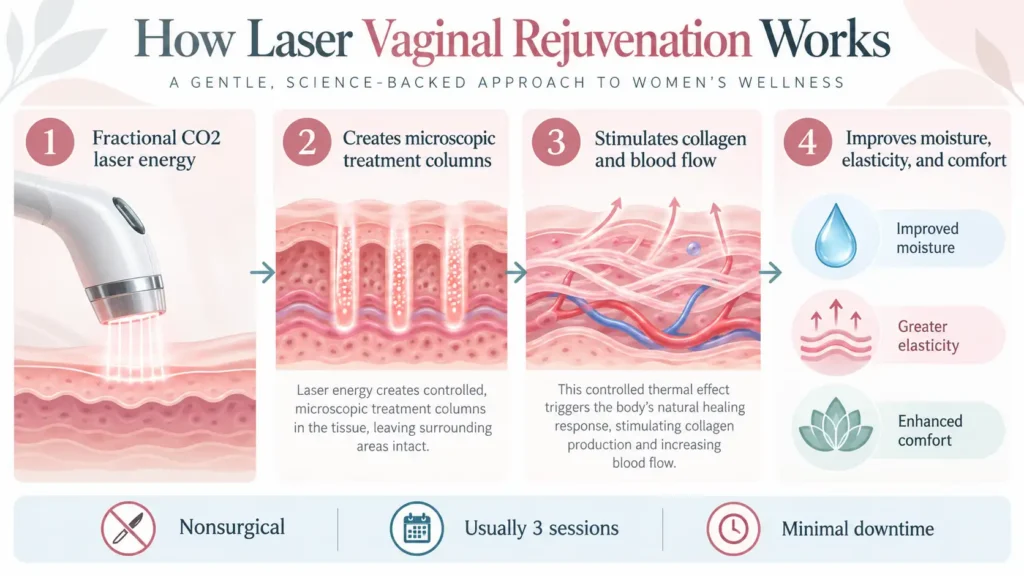
The most widely studied approach uses a fractional CO2 laser operating at a 10,600 nm wavelength. The laser creates microscopic ablation zones in the vaginal epithelium, tiny columns of treated tissue surrounded by untouched areas. This controlled micro-injury triggers the body’s wound healing response: fibroblast activation, new collagen synthesis (neocollagenesis), and extracellular matrix remodeling.
The practical result is thicker vaginal tissue with improved blood supply, increased natural lubrication, and restored elasticity. A 2024 meta-analysis published in Revista Brasileira de Ginecologia e Obstetrícia analyzed 12 randomized controlled trials involving 5,147 women and found that CO2 laser significantly improved Vaginal Health Index scores compared to sham treatment (MD 2.21, 95% CI 1.25 to 3.16). The same analysis showed significant reductions in dyspareunia, vaginal dryness, and vaginal burning.
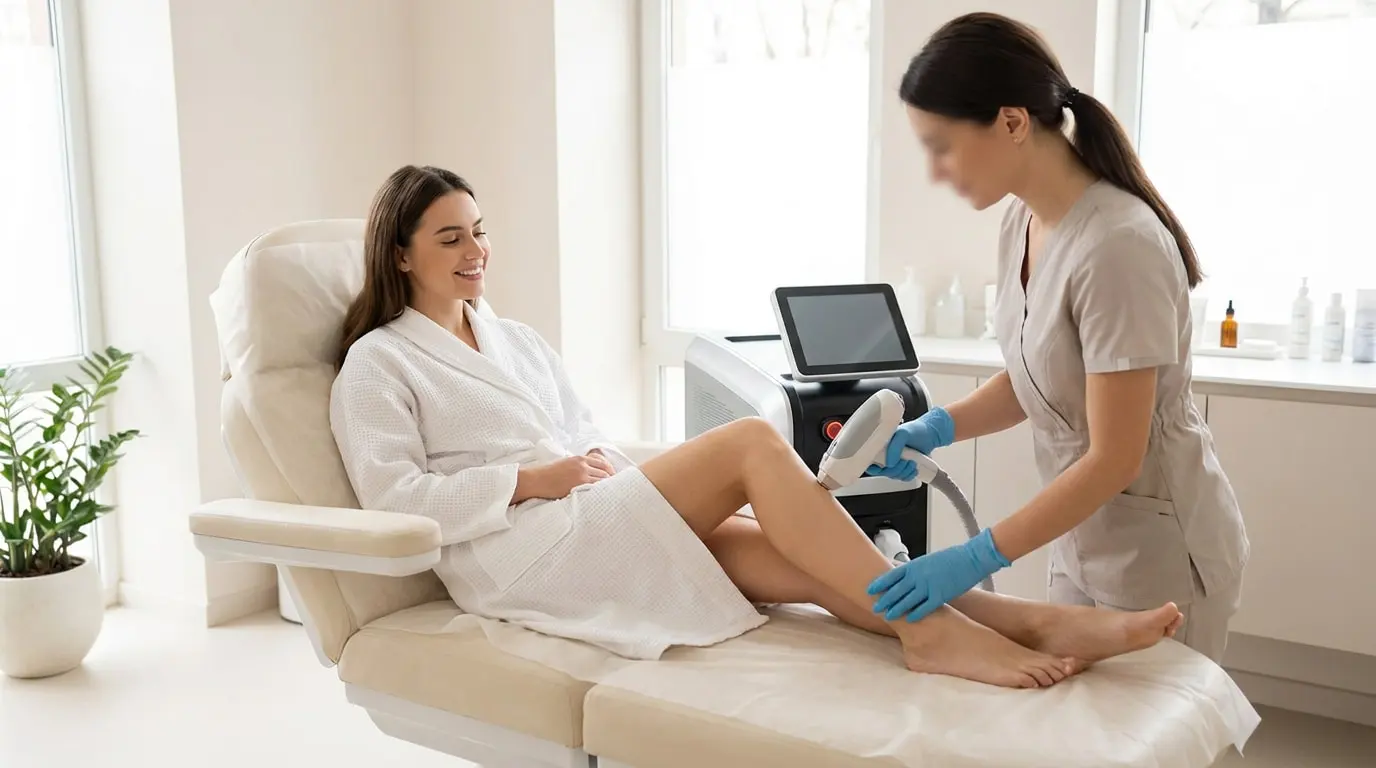
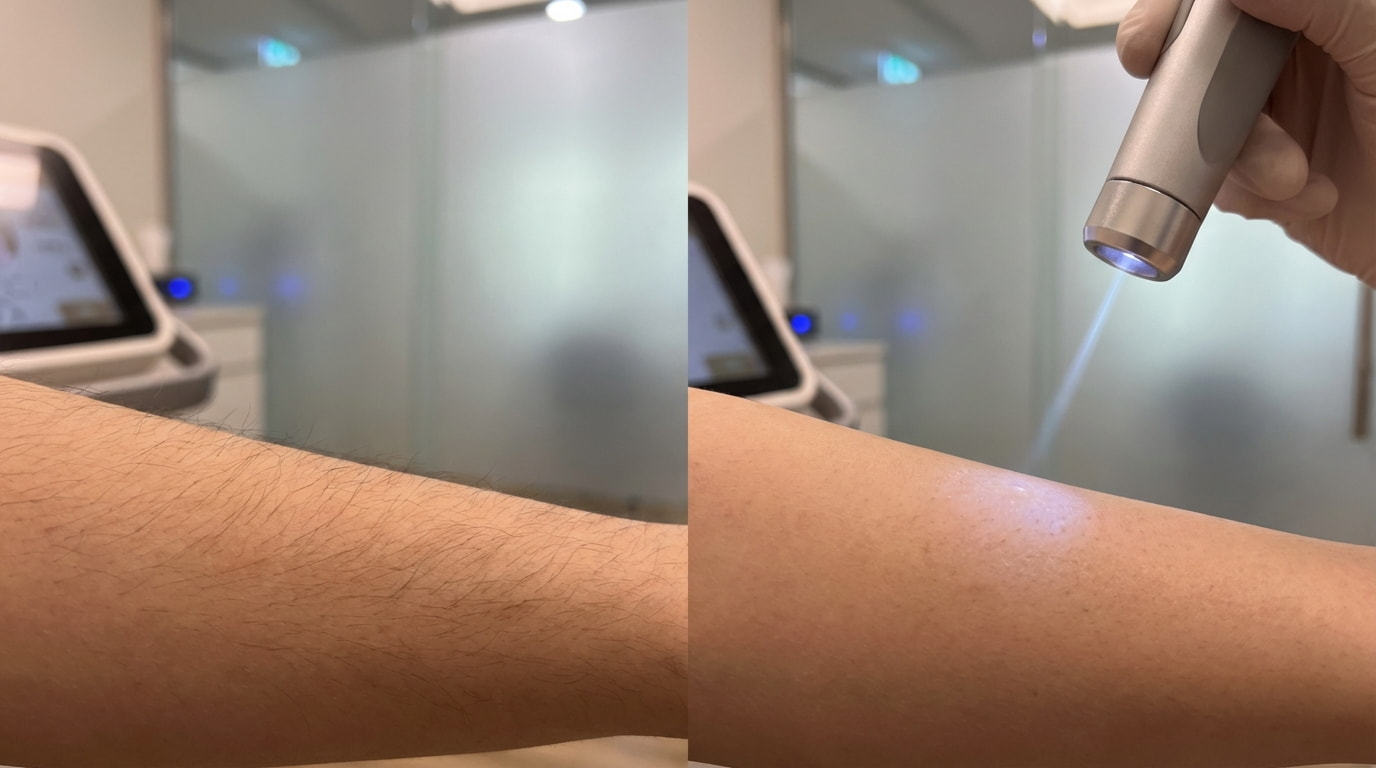
The procedure itself is quick. Most CO2 laser vaginal treatments take under 15 minutes. A specialized handpiece is inserted into the vaginal canal, and the laser delivers controlled pulses of energy to the tissue. Most women describe the sensation as mild warmth. Topical numbing can be applied beforehand, though many providers find it isn’t necessary.
CO2 Laser vs Erbium YAG: Two Different Approaches
Not all vaginal lasers work the same way. The two main technologies differ in how they interact with tissue.
CO2 fractional laser (10,600 nm) is ablative. It vaporizes microscopic columns of tissue, creating a stronger wound healing response. This tends to produce more significant tissue remodeling but may involve slightly more post-treatment sensitivity. MonaLisa Touch, diVa by Sciton, and FemTouch are well-known CO2 systems.
Erbium YAG laser (2,940 nm) is non-ablative. It heats tissue without vaporizing it, stimulating collagen through a gentler photothermal effect. Recovery is typically faster, but the tissue remodeling may be less pronounced. IntimaLase and Juliet are common Erbium systems.
Most of the clinical research, including the 2024 meta-analysis mentioned above, has focused on CO2 laser technology. Eleven of the 12 randomized trials in that review used CO2 devices. Head-to-head trials comparing the two technologies directly are still limited.
What Conditions Does It Treat?
Laser vaginal rejuvenation is most commonly used for symptoms associated with what doctors now call genitourinary syndrome of menopause, or GSM. That’s the clinical term for the collection of vaginal, urinary, and sexual symptoms that develop when estrogen levels decline after menopause. Research estimates that the majority of postmenopausal women experience some degree of GSM, and unlike hot flashes, these symptoms tend to get worse over time rather than resolving on their own.
Specific conditions that laser treatment may address include vaginal dryness and atrophy, painful intercourse (dyspareunia), vaginal laxity after childbirth or aging, mild stress urinary incontinence, reduced vaginal sensation, and recurring vaginal irritation or discomfort.
A 2025 study published in Scientific Reports followed 120 women treated with fractional CO2 laser and found significant improvements in vaginal laxity, Vaginal Health Index scores, lactobacilli levels, and vaginal pH balance compared to the control group (P < 0.001 for laxity improvement). The laser-treated group also showed a dramatically lower recurrence rate of bacterial vaginitis: 8.33% versus 36.67% in the control group at three months.
Who Is a Good Candidate?
The best candidates are generally adult women in good overall health who are experiencing one or more of the symptoms listed above. That includes postmenopausal women dealing with GSM symptoms, women who have noticed changes after childbirth, and women who haven’t gotten adequate relief from topical estrogen or pelvic floor exercises alone.
There are some situations where laser treatment may not be appropriate. Women who are currently pregnant or have given birth within the past three months should wait. Active vaginal or urinary tract infections need to be resolved first. Undiagnosed abnormal vaginal bleeding requires medical evaluation before any laser procedure. And women with a history of certain connective tissue disorders may need additional screening.
This is exactly why an in-person evaluation matters. A qualified provider will review your medical history, assess your symptoms, and determine whether laser treatment is the right fit or whether another approach would serve you better.
What to Expect During and After Treatment
Most treatment protocols involve three sessions spaced four to six weeks apart, followed by annual maintenance treatments. Each session takes under 15 minutes, and there’s no general anesthesia, no incisions, and no stitches.
Recovery is minimal. Most women return to daily activities the same day. Standard aftercare guidelines include avoiding sexual intercourse for 48 to 72 hours after treatment, avoiding tampons, douching, and swimming pools for the same period, using mild soap and water for cleaning, and taking acetaminophen if any mild discomfort occurs.
Temporary side effects can include mild warmth or tingling during the procedure, light spotting or discharge for a day or two, and slight redness or sensitivity. A 2026 randomized trial by Filippini et al. published in Medicina reported that side effects were mild and transient, with no serious adverse events and no patient discontinuations. The most common complaint was temporary burning, reported by 17% to 27% of participants.
How Long Does Laser Vaginal Rejuvenation Last?
Most clinical data and provider experience point to a 12 to 18 month window of noticeable improvement after completing a full treatment course. Some women report benefits lasting up to two years, while others may notice a gradual return of symptoms closer to the one-year mark.
The duration depends on several factors, including your age and hormonal status, the severity of symptoms before treatment, overall health and lifestyle factors, and whether you maintain annual touch-up sessions. Research follow-up periods in published trials have ranged from 4 to 24 weeks, so long-term data beyond 18 months is still limited. That said, annual maintenance sessions are the standard recommendation across providers, and most women who follow that schedule report sustained improvement.
Results aren’t immediate. Some tightening occurs right away from the thermal effect on tissue, but the real collagen remodeling process takes two to three months to fully develop. Most women notice the biggest difference after their second or third session.
How Much Does Laser Vaginal Rejuvenation Cost?
Laser vaginal rejuvenation is generally considered an elective procedure, which means insurance typically doesn’t cover it. Rare exceptions may exist for reconstructive cases following childbirth injury or trauma, but most patients should expect to pay out of pocket.
Across the industry, most providers charge somewhere between $500 and $1,500 per session for nonsurgical laser vaginal rejuvenation. A full course of three treatments generally runs $1,800 to $4,500 depending on the clinic, and annual maintenance sessions typically fall on the lower end of the per-session range. These are general industry figures and vary significantly from one provider to the next.
Several factors drive that variation. CO2 fractional laser systems tend to cost more per session than Erbium YAG devices. Geographic location matters, with providers in major metro areas typically charging more than those in smaller markets. Provider credentials play a role too, as board-certified physicians generally charge more than medspa technicians. The number of sessions you’ll need, along with additional costs like consultation fees, numbing agents, and aftercare products, should also factor into your planning.
Many providers offer package pricing for the full treatment course, and financing through services like CareCredit is available at many clinics. For a personalized cost estimate based on your specific needs, scheduling a consultation is the best starting point.
How Does Laser Compare to Other Options?
Laser isn’t the only nonsurgical approach to vaginal rejuvenation. Understanding the alternatives can help you make a more informed decision.
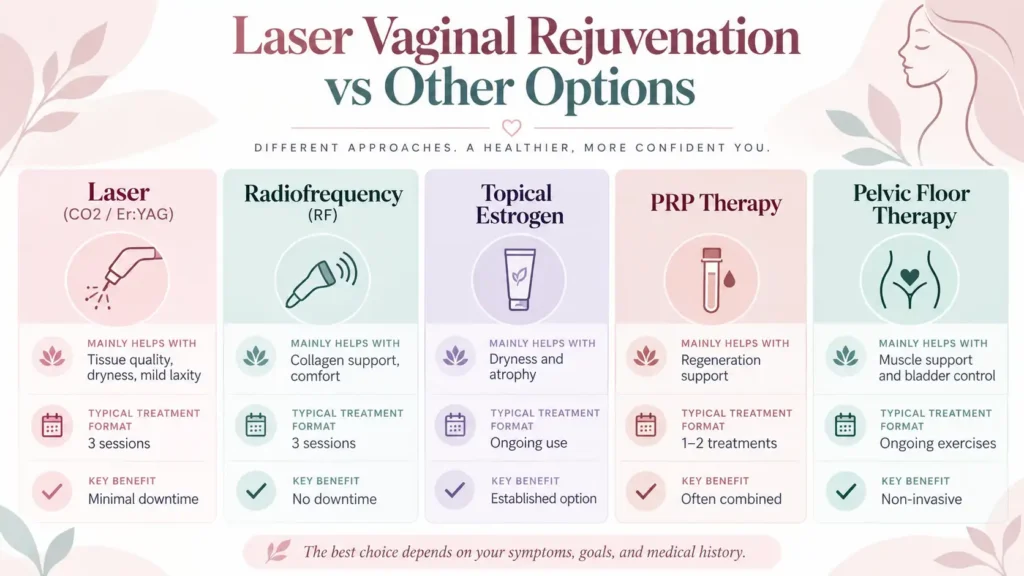
Radiofrequency (RF) devices like Votiva and ThermiVa use controlled heat rather than laser energy to stimulate collagen. They work on a similar principle but through a different energy source. RF treatments are generally considered comfortable and require no downtime, and results and session counts are comparable to laser.
PRP therapy, sometimes called the O-Shot, uses your own platelet-rich plasma injected into vaginal tissue to promote healing and tissue regeneration. Some providers, including those offering PRP therapy, use it as a standalone treatment or in combination with laser for enhanced results.
Topical estrogen in the form of creams, rings, or tablets remains the most established medical treatment for vaginal atrophy related to menopause. It’s effective for many women, but some prefer to avoid hormonal treatments or haven’t gotten sufficient relief from estrogen alone.
Surgical options like vaginoplasty and labiaplasty address different concerns entirely. These involve actual incisions, general or local anesthesia, and recovery periods of two to six weeks. They’re appropriate for more significant structural issues but aren’t comparable to nonsurgical laser treatment.
Pelvic floor therapy strengthens the muscles supporting the vaginal canal and bladder. It’s non-invasive, has no side effects, and can complement laser treatment well. That said, it addresses muscular tone rather than tissue quality, lubrication, or atrophy.
| Laser (CO2/Er:YAG) | Radiofrequency (RF) | PRP (O-Shot) | Surgical | Pelvic Floor Therapy | |
|---|---|---|---|---|---|
| Invasiveness | Nonsurgical | Nonsurgical | Injection | Surgical | Non-invasive |
| Sessions needed | 3, spaced 4 to 6 weeks | 3, spaced 4 to 6 weeks | 1 to 2 | 1 | Ongoing |
| Downtime | None to minimal | None | None | 2 to 6 weeks | None |
| Results duration | 12 to 18 months | 12 to 18 months | 6 to 12 months | Long term | Ongoing maintenance |
| Treats tissue atrophy? | Yes | Yes | Partially | No | No |
| Treats laxity? | Mild to moderate | Mild to moderate | No | Yes (significant) | Yes (muscular) |
| Insurance coverage | Rarely | Rarely | No | Sometimes | Often |
Is Laser Vaginal Rejuvenation FDA Approved?
This is an important question that deserves a straightforward answer. The laser devices used in vaginal rejuvenation, including the MonaLisa Touch and diVa systems, are FDA cleared for general gynecological use. That means the devices themselves have been reviewed and cleared for medical procedures.
However, in 2018 the FDA issued a safety communication noting that some manufacturers were marketing these devices specifically for “vaginal rejuvenation” without established safety and efficacy data for those particular claims. The communication was directed at the marketing practices, not a finding that the devices were unsafe. The devices were not recalled or banned. They remain in clinical use, and since that communication, multiple randomized controlled trials have added to the evidence base.
The 2024 meta-analysis across 12 RCTs reported no serious adverse events in any of the laser-treated groups. That said, the overall certainty of evidence was rated as low by GRADE criteria, which means more high-quality research is still needed. This is why choosing an experienced, qualified provider matters. A physician who can properly evaluate your symptoms, discuss realistic expectations, and monitor your response to treatment is essential for safe, effective outcomes.
Frequently Asked Questions
Does laser vaginal rejuvenation hurt?
Most women describe the sensation as mild warmth or a light tingling. The procedure doesn’t require general anesthesia, and many providers don’t even use topical numbing. Discomfort during treatment is typically minimal, and any post-treatment sensitivity resolves within a day or two.
How many sessions will I need?
The standard protocol is three sessions spaced four to six weeks apart. Some women with milder symptoms may see improvement after one or two sessions, while others may benefit from additional treatments. Annual maintenance sessions are recommended to sustain results.
Can I get laser vaginal rejuvenation if I’m still menstruating?
Yes. While many patients are postmenopausal, the treatment isn’t limited to women who have gone through menopause. Women experiencing vaginal changes after childbirth, hormonal fluctuations, or other causes can also be candidates. Your provider will typically schedule treatment at a specific point in your menstrual cycle.
How soon will I see results?
Some tightening from the thermal effect can be noticeable within the first week. The full collagen remodeling process takes two to three months, so most women see the biggest improvement after completing their second or third session.
Is there anything I should avoid before treatment?
Most providers recommend avoiding sexual intercourse for 24 to 48 hours before treatment, stopping NSAIDs like ibuprofen for a few days prior, and not scheduling during active menstruation. Share all medications and supplements with your provider beforehand.
Can laser vaginal rejuvenation help with urinary incontinence?
Some women do report improvement in mild stress urinary incontinence after treatment. The collagen remodeling in vaginal tissue can provide better support to the urethra and bladder neck. However, laser treatment isn’t a primary treatment for incontinence, and more significant cases should be evaluated by a urogynecologist.
What’s the difference between vaginal rejuvenation and labiaplasty?
They address completely different things. Laser vaginal rejuvenation is a nonsurgical treatment that improves the internal tissue quality, moisture, and elasticity of the vaginal canal. Labiaplasty is a surgical procedure that reshapes the external labia. Some patients pursue both, but they’re separate procedures with different goals, recovery times, and costs.
Is it safe to combine laser treatment with hormone therapy?
Many providers use laser treatment alongside bioidentical hormone replacement therapy for a more comprehensive approach to menopausal symptoms. The two treatments work through different mechanisms and can complement each other. Your provider can help determine whether a combined approach makes sense for your situation.